BUYING & FINANCE
Chinese Buyer Tokyo Real Estate: An Honest Guide to Wiring In
A Tokyo-based insider explains why mainland Chinese buyers park capital in Tokyo property, the USD 50k forex quota, AML source-of-funds checks, and remote buying.
On this page 6
TL;DR: Tokyo is one of the cleaner offshore parking spots for mainland Chinese capital: freehold title, no buyer residency rule, yen exposure, and a deep transparent market. The real friction is not Japan saying no, it is getting money out of China legally past the USD 50,000 per-person annual forex quota, and then satisfying Japanese bank and notary source-of-funds checks. None of this is tax advice, so confirm cross-border tax with a licensed professional before you wire a single yen.
Why Tokyo Keeps Pulling Mainland Chinese Capital
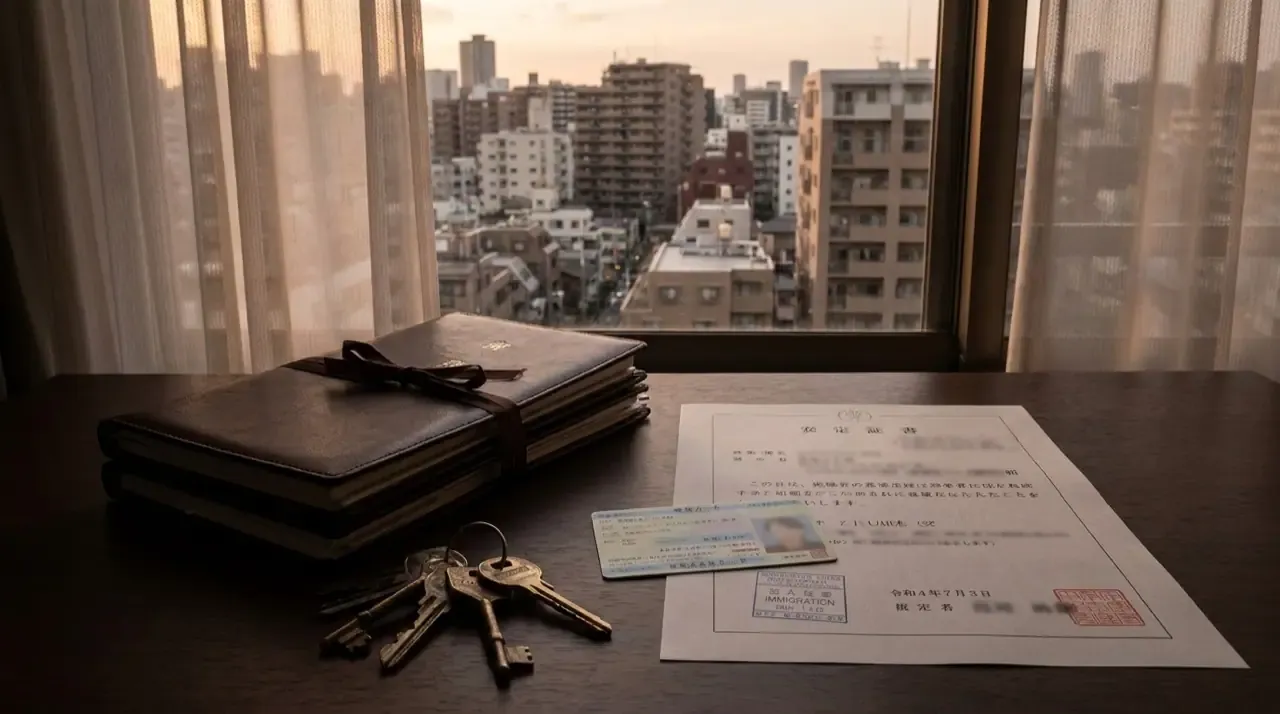
I hear from mainland buyers regularly, and the pitch they give themselves is consistent. Tokyo offers freehold ownership (in romaji, you buy the land or a registered share of it outright, not a 70-year lease like much of mainland China). There is no residency or visa requirement to buy: a buyer sitting in Shanghai can own a Minato apartment without ever holding a Japanese visa. The yen has been historically weak against the renminbi (directional, as of writing), which makes Tokyo feel like a discount to anyone earning or holding in stronger currencies.
Then there is the boring, underrated part: Japan’s property registry, the toki-bo (the official land and building register), is public and reliable. You can confirm who owns what and what loans sit against it. After years of opaque mainland off-plan projects and stalled developers, that legibility is itself a selling point. People are not chasing yield first. They are chasing a safe-haven store of value they can verify and, if needed, sell to a global pool of buyers.
The secondary reality is yield is modest. Central Tokyo gross rental yields tend to sit in the low-to-mid single digits (directional, as of writing), and net is lower after the building’s shuzenhi (the repair-reserve fund), management fees, and taxes. If someone promises you a fat guaranteed return, slow down. That is marketing, not the market.
The Real Bottleneck Is Leaving China, Not Entering Japan
Here is the honest framing for China buy Japan property: Japan is the easy half. The hard half is China’s capital account.
Mainland individuals face an annual foreign-exchange conversion quota of roughly USD 50,000 per person (directional, as of writing) under State Administration of Foreign Exchange rules, and that quota explicitly may not be used for overseas property purchase. A typical central-Tokyo apartment runs well into the hundreds of thousands of dollars, so the quota alone never funds a deal. This is the single biggest structural fact about Japan property Chinese capital controls, and it is why so much of the conversation among Chinese investor Tokyo apartment buyers is really about money movement, not about the building.
I am going to be direct about what I will and will not do. People discuss workarounds: pooling quota across family members (sometimes called smurfing), routing through Hong Kong accounts, using offshore earnings, or borrowing against onshore assets through a foreign branch. Some of these touch or cross AML and Chinese forex law. I do not coach evasion, structuring, or false documentation, and any agent or banker who casually does is a liability you do not want attached to your name. Moving money from China to buy Japan property legally generally means using funds already legitimately offshore: existing overseas accounts, Hong Kong or Singapore holdings, foreign salary, or genuine overseas business proceeds. If your capital is entirely onshore in renminbi, that is a conversation for a licensed cross-border tax and legal advisor before anything else, full stop.
Related reading: Moving to Japan? Rent vs. Buy as a Foreigner, by the Numbers.
Wiring Funds and Surviving the AML Source-of-Funds Check
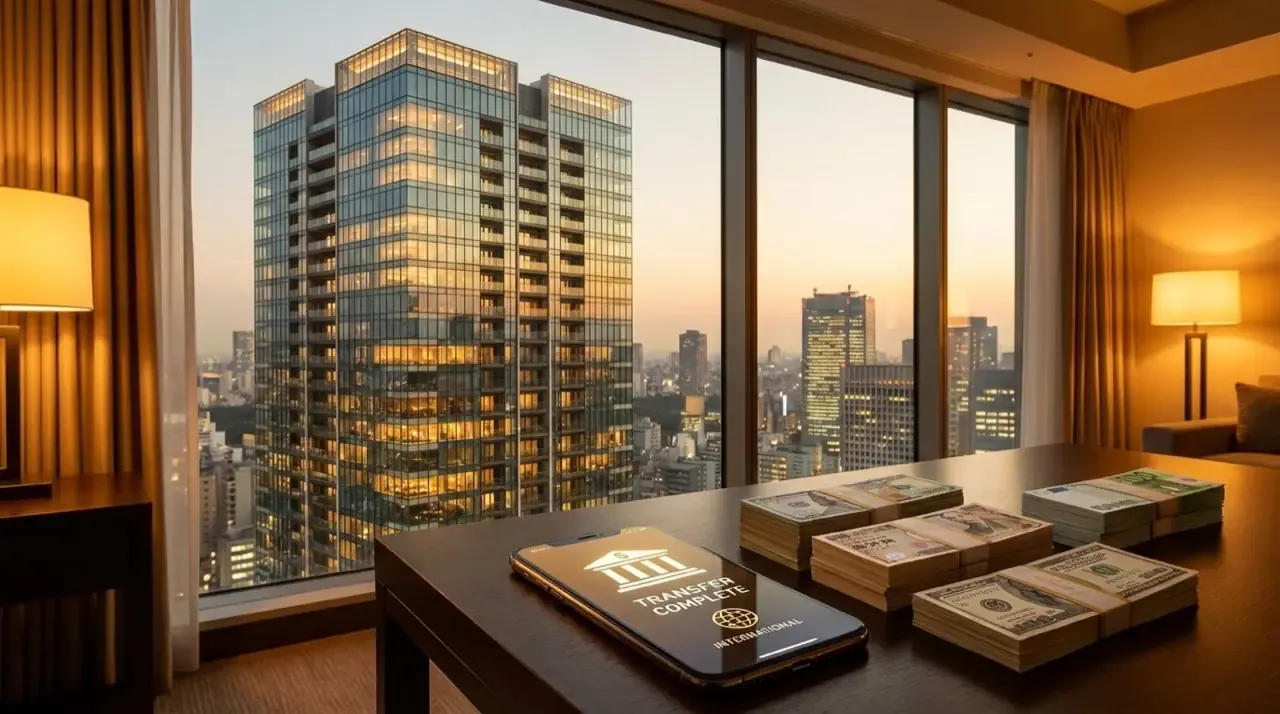
Assume your money is legitimately offshore. You still have to get it into Japan and through a closing.
Japanese banks, the shihoshoshi (the judicial scrivener who registers title), and the brokerage are all bound by anti-money-laundering and know-your-customer rules. For a foreign buyer wiring a large sum, expect a source-of-funds review. In practice they will ask, in plain terms, where did this money come from and can you prove it. Useful documentation includes:
- Bank statements showing the funds accumulating over time, not appearing overnight.
- Proof of the underlying source: employment and salary records, a business sale, an inheritance, prior property sale proceeds, or investment redemptions.
- A clear, consistent paper trail from that source to the account you are wiring from.
The failure mode I see is a buyer who has the cash but cannot explain it cleanly, because it arrived through three intermediary accounts in two jurisdictions. Money that cannot be explained is money that gets a wire frozen or a closing delayed. Tidy provenance beats clever provenance every time.
Two cost notes while we are on money. Japan’s brokerage commission is capped by law at 3% of the price plus 60,000 yen (plus consumption tax) for deals above a set threshold, so any agent quoting more on a standard resale is overcharging. And if you later sell as a non-resident, the buyer is generally required to withhold 10.21% of your sale price and remit it to the tax office against your capital-gains liability. That is a fixed legal mechanism, not an estimate, though whether it ultimately applies to your situation is a question for a tax professional.
Related reading: How to Move the Money: Wiring Funds Into Japan for a Property Purchase Without Surprises.
The FEFTA Report You Probably Owe After Closing
This one trips up almost every remote buyer, so read it twice. Under Japan’s Foreign Exchange and Foreign Trade Act (FEFTA), a non-resident foreign national who acquires Japanese real estate generally must file a post-acquisition report to the Bank of Japan (BOJ), routed through the Ministry of Finance, typically within about 20 days of the acquisition (directional, as of writing).
It is usually an informational filing rather than an approval gate, and for ordinary residential purchases it is rarely a barrier. But it is a legal obligation, and quietly skipping it is not a strategy. Your shihoshoshi or a tax accountant who handles foreign buyers can prepare it; just make sure someone is explicitly assigned to do it, because remote buyers often assume the agent did it and the agent assumed the scrivener did it, and then nobody did. Confirm who owns this task in writing before closing.
The Remote Purchase Process, Start to Finish
Many mainland buyers never set foot in the building before they own it. A remote purchase typically runs like this:
- Define the mandate. Budget in yen, target ward, and the goal (capital preservation, rental income, or a future base). Wards differ enormously on price, yield, and liquidity, so this is where you do the homework, not after.
- Engage a licensed agent and confirm fees against the legal cap above.
- Reserve and review. You will receive the juyo jiko setsumei (the legally mandated important-matters disclosure) explaining title, restrictions, building rules, and the repair-fund health. Have it explained in a language you actually read.
- Sign by proxy or remotely. A power of attorney, plus notarized and apostilled identity and address documents from your home jurisdiction, lets the process complete without you flying in.
- Wire funds and clear AML. Build in time for the source-of-funds review rather than promising the seller an impossible closing date.
- Register title and file the BOJ FEFTA report. Title registration through the scrivener, then the post-acquisition filing.
Budget for ongoing realities too: annual fixed-asset tax, the monthly management and repair-fund contributions, and the practical need for a local rent-collection and tax-filing partner if you are leasing it out from abroad.
What This Means For Your Next Move
If your capital is already sitting legitimately offshore, Tokyo is one of the most straightforward major markets in the world for a non-resident to buy into, and the friction is mostly paperwork and patience, not prohibition. If your capital is entirely onshore in renminbi, the honest answer is that the quota and capital-control questions need a licensed cross-border advisor before a property conversation even makes sense. I would rather tell you that now than after a wire gets frozen.
When you are ready to scope a real deal, Talk to us and a real person will talk through your specific source-of-funds and FEFTA questions — and introduce you to licensed professionals for the transaction itself. To pressure-test budgets and yields before you commit, run the numbers in our tools, and if you are still deciding where in the city to plant the money, compare wards on price and liquidity first. The buyers who do well here are the ones who get the boring compliance right early.
Sources: Bank of Japan: Foreign Exchange and Foreign Trade Act, Japan External Trade Organization (JETRO) investment guide, Japan Ministry of Finance, China State Administration of Foreign Exchange (SAFE)
Related reading: Does Buying Property in Japan Get You a Visa? The Honest Answer.