BUYING & FINANCE
Before You Buy in Tokyo: Bank Account, Hanko, Tax Representative — the Foreigner Setup Checklist
The administrative infrastructure foreign buyers need before closing on a Tokyo property: bank account options, hanko vs. affidavit, tax representative, and the new FEFTA and nationality-disclosure rules.
On this page 6
TL;DR: Owning Tokyo property as a foreigner is legally simple; the setup is where deals stall. If you’re non-resident you don’t need a hanko or a Japanese bank account — you need an affidavit in place of them, a tax representative appointed in Japan, and (since April 2026) a FEFTA report filed after you close. Get these moving before contract signing, not after.
You can own the apartment outright, forever, on any visa or no visa. We’ve said that across this newsletter and it’s true. But “can I buy” and “what do I need to actually close and operate” are different questions, and the second one is where I watch prepared buyers glide and unprepared ones lose weeks.
This is the plumbing. None of it is hard. All of it has lead times. Here’s the checklist every foreign buyer should run through before signing anything.
Do you need a Japanese bank account?
Short answer: to buy, no. To operate a rental long-term, it helps a lot.
For the purchase itself, the settlement funds move by international wire — either to the seller’s account, to the judicial scrivener’s client account, or via an arrangement your agent sets up. You don’t need a yen account sitting ready. So don’t build your timeline around opening one.
And you probably can’t open one quickly anyway. Most major Japanese banks require a residence card (zairyu card, the ID for people registered as living in Japan) plus, in practice, six months of residency before they’ll open a regular account. Japan Post Bank and the megabanks are firm on this. Non-resident-friendly options exist at the margins — Sony Bank and a few others have processes that have worked for some overseas buyers with a Japan contact address — but they’re inconsistent and slow. Treat a Japanese account as a post-purchase project, not a prerequisite.
Where it matters is rent collection. If you’re renting the place out, your management company can wire rent abroad each month (fees ~¥2,000–¥4,000 per transfer, directional, as of writing) or hold and batch it. A yen account smooths that, and once you own registered property with a tax representative in place, banks get more comfortable. Wise’s JPY receiving account is a workaround some owners use — check current coverage for your country.
Honest caveat: a foreign buyer with confirmed wire capacity from their home bank closes just as fast as a buyer with a yen account. Don’t let “I should open a Japanese account first” delay your search.
Related reading: UK & Australian Buyers of Japanese Property: An Honest Guide.
Hanko, or the affidavit that replaces it
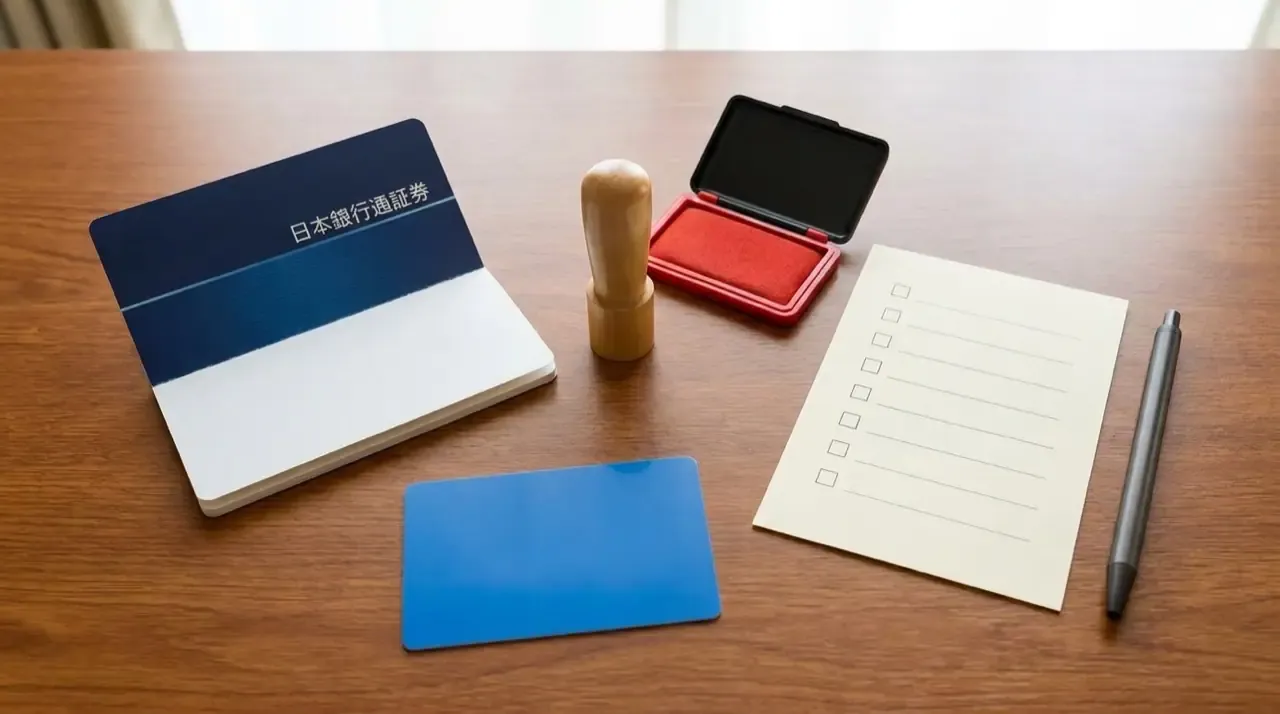
Japanese transactions traditionally run on a registered seal — a hanko (carved name stamp) backed by an inkan shomei (seal registration certificate) from your local ward office. Residents use this to prove identity at signing and registration.
You can’t get one if you don’t live here. There’s no ward to register your seal at. So non-residents use an affidavit (a sworn signature-and-identity certificate) in its place.
Here’s what the affidavit actually does and how to get it:
- What it is: a document stating your name, address, date of birth, nationality, and a sworn confirmation that the signature on it is yours. It substitutes for both the seal certificate and the certificate of residence (jusho shomei) that a Japanese resident would provide.
- Where you swear it: before a notary public in your home country, or at a Japanese embassy/consulate. If notarized by a local notary, it then generally needs an apostille (for Hague Convention countries) or consular legalization to be accepted by the Japanese registry.
- Important 2024 change: affidavits alone no longer prove your address. Since April 2024, the registry requires the affidavit plus a passport for address verification. Bring both.
- Cost and timing: professional drafting runs roughly ¥20,000–¥30,000 (directional); the swearing itself is often same-day, but apostille processing adds days to weeks depending on your country. Translation into Japanese is required if the document isn’t already in Japanese.
The trap is leaving this to the last week. The affidavit needs to exist by the time you sign and register. Have your judicial scrivener specify the exact wording early, then get it sworn and authenticated while the rest of the deal proceeds. If you happen to be buying while physically in Japan, your home country’s embassy here can notarize it — convenient, but they book up.
The tax representative — non-negotiable, file it early
This is the one foreign buyers most often miss, and it’s not optional.
If you’re a non-resident and you own Japanese real estate, Japanese tax law requires you to appoint a tax representative (nozei kanrinin — a person resident in Japan who receives and handles your tax matters). This sits under the National Tax Act and the Local Tax Act. The representative receives your fixed asset tax bills (which arrive around May), pays them, and serves as the contact point for the tax office on income and capital gains filings.
Who can be your tax representative:
- A tax accountant (zeirishi) — the usual choice if you have rental income to file
- A judicial scrivener (shiho shoshi) — sometimes offered as part of the purchase
- Your property management company — common for rentals, but confirm it’s a written appointment, not an assumed favor
- Any trusted individual with a Japanese address
Cost is roughly ¥30,000–¥100,000 per year (directional), scaling with scope. Filing the appointment with the relevant tax office is the formal step that makes it real.
Honest caveat: if you actually live in Japan with a residence card, you generally don’t need a tax representative — you’re your own. This requirement is specifically a non-resident one. The reforms taking effect through 2026 broadly treat foreign nationals resident in Japan as domestic, so check your status before paying for a service you don’t need.
The failure mode I see: a buyer assumes the management company “handles the tax stuff.” Then a fixed asset tax bill goes unanswered, and the National Tax Agency — which matches the property registry against filings — flags the account. Put the appointment in writing on day one.
What changed in April 2026 — two new filings
If you’ve read older guides, two things are now different. Both took effect April 1, 2026.
1. FEFTA reporting is now required for everyone. Under the Foreign Exchange and Foreign Trade Act, a non-resident acquiring Japanese real estate must file Form 22 (Report on Acquisition of Real Estate) with the Minister of Finance, submitted through the Bank of Japan, within 20 days of acquisition. The form covers property type, location, area, acquisition date, and price. The big change: the old exemption for property bought as a personal residence was removed. Personal use, rental, investment — all report now. It’s a notification, not a permission; nobody is approving or blocking your purchase. But it’s a deadline, and your scrivener or tax accountant should own it.
2. Nationality disclosure on registration. New property registrations now require the owner to declare nationality, with passport or equivalent as proof. This data sits in a government database for statistics and oversight — it is not printed on the public title certificate (tokibo). Again: a disclosure, not a restriction. Foreign ownership in Japan remains unrestricted and freehold.
Neither of these stops you buying. They’re paperwork with clocks attached. The point of listing them here is so they don’t surprise you the week after settlement.
Related reading: Are you a Japan tax resident or non-resident? (owning Tokyo property from abroad).
The pre-purchase setup checklist
Run this before you sign a contract, in roughly this order:
- Passport valid and in hand — your core ID at every stage.
- Affidavit wording confirmed with your judicial scrivener; sworn and apostilled/legalized in time for registration.
- Tax representative identified and appointment drafted — accountant, scrivener, or management company, in writing.
- Wire capacity confirmed with your home bank: daily limits, large-transfer documentation, lead time (initiate 5 business days before settlement).
- Power of attorney drafted if you’ll close after leaving Japan (notarized + apostilled — see our settlement walkthrough in /articles).
- FEFTA Form 22 owner assigned — know who files it within 20 days of closing.
- Earthquake + fire insurance lined up; rent guarantee required of any incoming tenant.
- Rent-collection mechanism decided — abroad wire, batched, or a yen account opened later.
Miss none of these and the administrative side of your purchase is a non-event. Miss two and you’re explaining to a seller why you can’t close on schedule.
Related reading: How to buy property in Japan: step-by-step roadmap and realistic timeline.
Your next step
The setup work is unglamorous, but it’s exactly where a good agent earns their fee — sequencing the affidavit, the tax representative, and the FEFTA filing so they happen in parallel with the deal instead of holding it up. If you’re at the “preparing to buy” stage, this is the moment to get the checklist running.
Have a licensed agent confirm your document list before you sign anything — if you don’t have one yet, start at /contact and we can introduce you to licensed professionals. They’ll map your specific situation — nationality, residency status, financing, intended use — to exactly which documents you need and when. To pressure-test the numbers behind the property itself, run the costs through our calculators at /tools, and if you’re still choosing a location, compare wards at /wards. Get the plumbing right first; the buying gets easy after that.
Directional figures as of writing; tax and reporting rules change — confirm specifics with a Japanese tax accountant and your judicial scrivener for your nationality and residency status.
