INSIDER TAKE
A True Global City at Half Price: Why Tokyo Per Square Metre Is the Last Mispricing
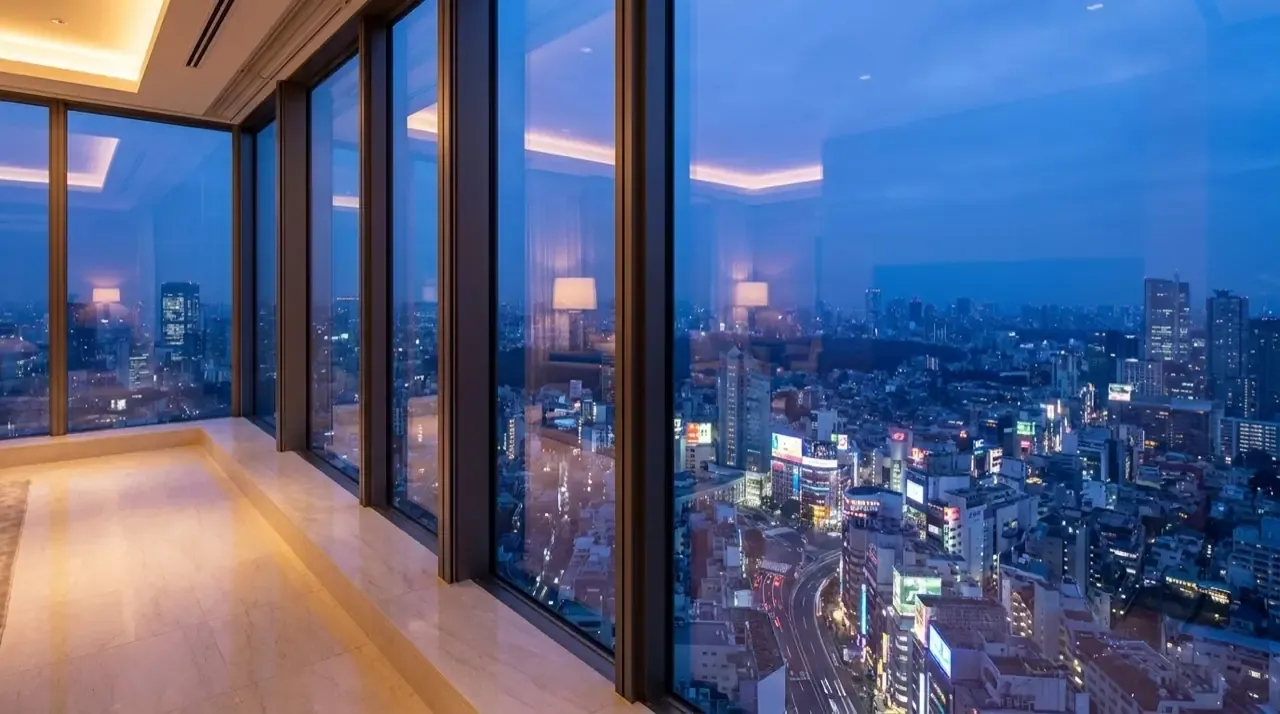
On a prime price-per-square-metre basis, Tokyo trades at roughly half of London and well below New York and Hong Kong, despite being the largest metro economy on earth with deep liquidity and clean title. The repricing has already started, and the floor-space-per-dollar gap is the clearest signal of where global capital is heading next.
On this page 10
- The number that should stop you cold
- Why a true global city was mispriced for so long
- The repricing has already started
- What Tokyo actually costs per square metre in 2026
- Scale and liquidity the “expensive” cities cannot match
- The other “cheap Japan”: why sub-¥5M listings exist
- What prices actually look like, band by band
- What a cheap price really costs — and when cheap is genuinely good
- What this means for a buyer comparing cities
- How to act on it
TL;DR: On a prime price-per-square-metre basis, Tokyo trades at roughly half of London and well below New York, Singapore, and Hong Kong, even though it is the largest metropolitan economy on earth with deep liquidity and clean, rule-of-law title. The market has stopped ignoring this: Knight Frank clocked Tokyo prime values up roughly 55 to 58 percent in a single year, the top performer worldwide. For a buyer comparing global cities on what a dollar actually buys in floor space, Tokyo is the standout repricing already in motion. Japan is cheap at two completely different levels, though — the sub-¥5 million rural listings are cheap because value is leaving, while central Tokyo is “cheap” only by global-city comparison, because value is arriving. This article covers both, and how to tell which trade you are making.
The number that should stop you cold
Set Azabu in Minato-ku, central Tokyo, as the benchmark at 100. On a comparable prime per-square-metre basis, London sits around 207.5, New York around 144.6, and Singapore around 140.2 (directional, as of writing). Read that again. The same quality of address, the same tier of building, costs roughly double in London for every square metre you take home.
This is not a story about a cheap, obscure market in a fragile country. It is a story about one of the three or four genuine global cities on the planet priced as if it were a tier below. Tokyo has the safety, the infrastructure, the depth, and the legal certainty of London or New York. It just has not been priced like them.
Put it in money terms and it gets sharper. Roughly one million US dollars buys you about 64 square metres of prime Tokyo floor space (directional, as of writing). The same million buys you about half that in Singapore, and a fraction of it in Hong Kong, where prime exceeds roughly 30,000 US dollars per square metre, the most expensive residential real estate in the world. Same money. Double the home. That is the entire thesis in one line.
One honest caveat: per-square-metre comparisons across cities are never perfectly clean. Definitions of prime, measurement of floor area, and the exact mix of buildings differ between markets. Treat these figures as directional, not as a spreadsheet you would underwrite a purchase on. The gap is real and large; the second decimal place is not the point.
From the desk — When overseas buyers see a prime Minato unit in person and convert the price back to their home currency, the same reaction keeps repeating: a long pause, then ‘that’s it?’ The buyers most familiar with London and New York are consistently the ones who freeze the longest, because they recognize exactly what they would be paying double for at home.
Why a true global city was mispriced for so long
If Tokyo is this good and this cheap, the obvious question is why. The answer is mostly about the last thirty years, not the next ten.
After the 1980s bubble burst, Japanese property spent a generation going sideways or down. A whole cohort of global investors filed Tokyo under “value trap” and stopped looking. Meanwhile London, New York, Hong Kong, and Singapore compounded through two decades of cheap money and trophy-asset demand, pulling their per-square-metre prices far ahead. The gap you see today is the accumulated result of Tokyo sitting out a party everyone else attended.
Layer on the yen. A weak yen makes Tokyo dramatically cheaper for anyone earning or holding US dollars, Singapore dollars, or Hong Kong dollars. Part of the floor-space-per-dollar discount is genuine value, and part of it is a currency dislocation. The honest read: the FX piece may not last forever, which is precisely why it is an argument to look now rather than later. If the yen normalises, the dollar-denominated entry point you see today simply disappears.
The repricing has already started
Here is what separates this from the usual “undervalued, someday” pitch: the market has already begun to close the gap, and the move is large.
Knight Frank’s 2025 Wealth Report put prime Tokyo new-build apartment values up 58.5 percent, and up 55.9 percent over the twelve months to the third quarter, making Tokyo the world’s top prime residential performer. That is not a rounding error. That is a market repricing in real time.
For context, global luxury residential prices rose just 3.2 percent across 2025, with 73 of 100 tracked markets posting gains. Tokyo’s surge is a multiple of the global average, more than fifteen times it. When one major city moves that far ahead of the pack from a low base, the most plausible explanation is catch-up: capital recognising a mispricing and correcting it, not a speculative blow-off in an already-expensive market.
The honest caveat here matters too. A 55-plus percent annual move is fast, and nothing rises in a straight line. Expect the pace to cool. But the direction of travel, narrowing the gap to London and New York, is the structural story, and structural stories take years, not quarters, to play out.
What Tokyo actually costs per square metre in 2026
Knight Frank tracks prime new-build, the top sliver of the market. For the broad market, Japan publishes three different per-square-metre numbers, and mixing them up is the most common mistake in Tokyo price comparisons. Here they are side by side, all for the 23 wards:
| Measure | ¥ per ㎡ | Change | Period | Source |
|---|---|---|---|---|
| Resale condo, price agreed (floor area) | ¥1,326,900 | −0.3% YoY | Aug 2026 | REINS |
| New condo, launch price (floor area) | ¥2,122,000 | −1.6% YoY | Aug 2026 | Real Estate Economic Institute |
| New condo, launch price, full year | ¥2,109,000 | +23.3% | 2025 | Real Estate Economic Institute |
| New condo, central 6 wards, full year | ¥2,879,000 | — | 2025 | Real Estate Economic Institute |
| New condo, central 6 wards | ¥2,774,000 | vs ¥3,390,000 a year earlier | Aug 2026 | Real Estate Economic Institute |
| Residential land, 23-ward average | ¥856,400 | +9.0% | 1 Jan 2026 | Official land prices (chika koji) |
| Residential land, highest ward (Chiyoda) | ¥3,631,400 | +10.7% | 1 Jan 2026 | Official land prices |
| Residential land, lowest ward (Katsushika) | ¥387,500 | +5.6% | 1 Jan 2026 | Official land prices |
Sources: REINS Market Watch, August 2026; Real Estate Economic Institute, Greater Tokyo new condominium market, August 2026 and 2025 annual summary; Tokyo Metropolitan Government Bureau of Finance, 2026 official land prices (base date 1 January 2026). “Central 6 wards” here means Chiyoda, Chuo, Minato, Shinjuku, Bunkyo and Shibuya. Ward-by-ward tables are on our Tokyo 23 Wards Property Data 2026 page.
Resale is what the market actually trades at. The REINS figure is the average price per square metre of floor area on resale condos that actually changed hands in the month. In August 2026 the average 23-ward resale deal was ¥75,260,000 for 55.86㎡, in a building 26.86 years old. That ¥1,326,900 per ㎡ works out to roughly ¥4.39 million per tsubo, the unit Japanese agents still quote in (computed: × 3.3058). It is also the number that just turned: −0.3% year on year, the first annual decline in 76 months, on contract volumes down 20.6%. One month is not a trend, but it is the first crack in a six-year streak, and it fits the caveat above that the pace of the prime surge would cool.
New-build carries a large premium and a heavy mix effect. A new 23-ward condo launched at ¥2,122,000 per ㎡ in August 2026, about 1.6 times the resale figure (computed). Part of that is genuinely newer stock and modern specs; part is location and product mix, meaning which sites and towers happen to be launching that month. The mix effect cuts both ways: the central 6 wards’ August figure of ¥2,774,000 is well below the ¥3,390,000 of August 2025, yet the full-year 2025 average was ¥2,879,000 and the 2025 23-ward average rose 23.3%. A single month with a different set of buildings on sale can swing these averages by double digits, so compare years, not months. Our new-build versus resale guide covers what the premium buys you.
Land is priced per square metre of ground, not floor. The official land price (chika koji) is the government’s annual appraisal of standard sites. Residential land runs from ¥387,500 per ㎡ in Katsushika to ¥3,631,400 in Chiyoda, more than nine times higher (computed), with the central 5 wards averaging ¥2,138,700 (+13.0%). These are not condo prices. A condo building with a floor-area ratio of several hundred percent (yoseki-ritsu) spreads each square metre of land across several square metres of apartments, so a ward’s land price per ㎡ can sit above or below its condo price per ㎡ without either being wrong. Land prices tell you where value is rising fastest (ward-by-ward land appreciation); the REINS figure tells you what a unit will actually cost.
The practical rule: when someone quotes “Tokyo per square metre,” ask which of the three it is. A global comparison built on new-build prices and a local valuation built on resale contracts can both be right and still sit far apart: in August 2026 the resale figure was about 37% below the new-build one (computed: 1,326,900 ÷ 2,122,000).
Scale and liquidity the “expensive” cities cannot match
Price is only half the case. The other half is what backs the price.
Greater Tokyo is home to roughly 37 million people, the largest urban economy in the world. That is not a number you collect for trivia. It is the foundation of two things buyers should care about most: rental depth and exit liquidity.
Rental depth means tenants. A metro of 37 million generates relentless, broad-based demand for housing across every price point, which is what makes Tokyo yields hold up while occupancy stays high. Smaller “expensive” cities like Singapore (around six million) or Hong Kong (around seven and a half million) simply cannot offer the same breadth of tenant base or the same diversity of demand.
Exit liquidity means buyers when you sell. A deep, transparent market with clean title and a functioning registry is one you can actually get out of, in normal conditions, without a fire sale. That combination, world-city scale plus rule-of-law certainty plus a discounted entry price, is genuinely rare. Most cities give you one or two of those. Tokyo, right now, gives you all three.
The other “cheap Japan”: why sub-¥5M listings exist
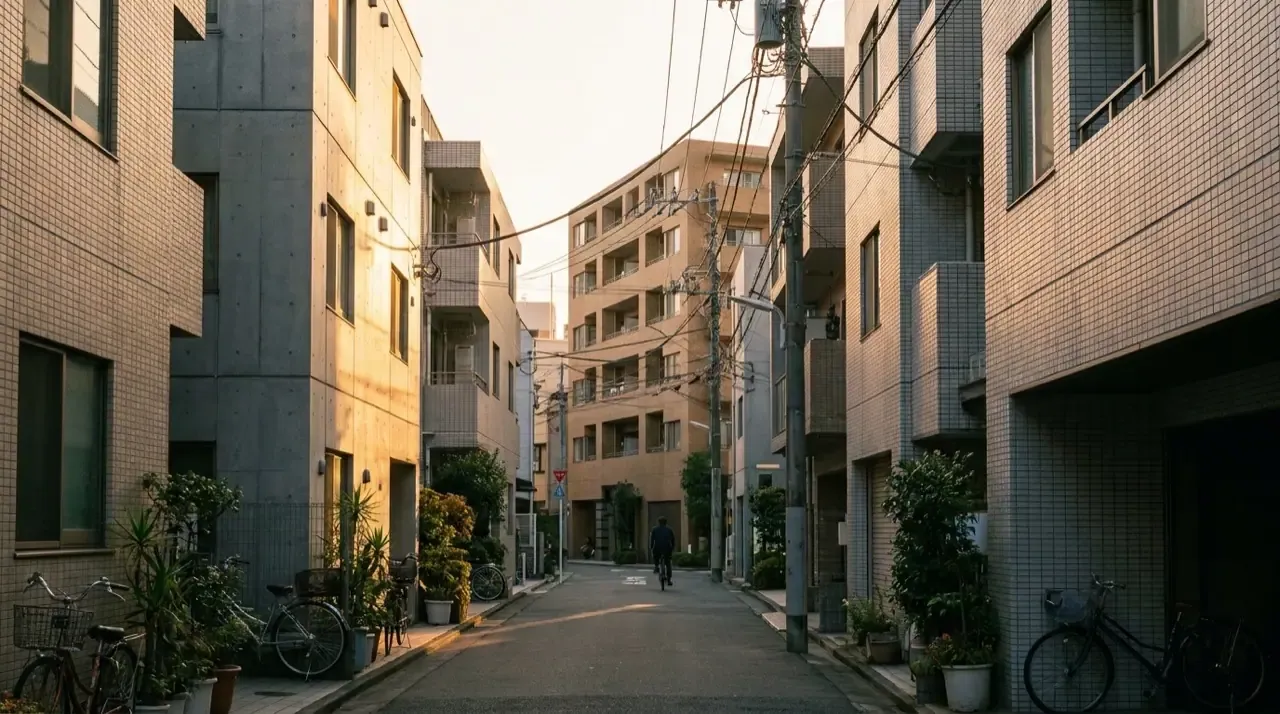
There is a second, very different version of “cheap Japan” that the same overseas buyers run into on the portals, and it needs separating from the Tokyo thesis. Apartments in regional cities for ¥3–5 million. Suburban resort-era condos for under ¥1 million. Rural houses that cost less than the furniture inside them. For a buyer used to London, Sydney or San Francisco pricing, it reads like a typo — and with a weak yen converting everything into dollars or euros at a discount, the arithmetic looks even more absurd.
The listings are genuine. You can really buy them. But at this end of the market an ultra-low price is rarely an inefficiency waiting for a clever foreigner to arbitrage. It is usually the market functioning with brutal accuracy. Five structural forces produce the sub-¥5M listing, and every cheap property you will ever look at is priced by some combination of them.
Buildings depreciate to zero. Japanese practice treats the building as a consumable that loses value over decades — wooden houses fastest, concrete condos more slowly — while only the land holds value. A 40-year-old apartment is priced like a 40-year-old car, regardless of how charming the renovation photos look. This is cultural and institutional, baked into bank lending and tax schedules, and it does not care that your home country prices old buildings as “character.”
Shrinking demand outside the metros. Japan’s population is falling everywhere except the biggest urban cores. In regional cities and rural areas there are more homes than households and the gap widens every year — that is the akiya (vacant house) phenomenon, and it means the marginal buyer for much cheap stock simply does not exist. A price with no queue behind it keeps falling.
Leasehold land. Some strikingly cheap listings sit on leased land (shakuchiken): you own the building, rent the ground under it, and face ground rent plus renewal complications. Priced correctly, leasehold trades at a deep discount to freehold — the mechanics are here — but a first-time foreign buyer scanning for the lowest number often does not notice which one they are looking at.
The management-fee trap. A condo’s sticker price is only the entry ticket. Every month, forever, you owe the management fee (kanrihi) and repair reserve (shuzen tsumitatekin) — and in aging buildings with few remaining owners, those fees climb steeply because fewer households share the same elevator, roof and plumbing. Resort-era condos in onsen towns are the extreme case: units listed for ¥100,000 because the monthly fees are ¥30,000–50,000 and the seller is paying you to take the obligation. The monthly-carry math is here — read it before any “bargain” condo.
No-financing buildings. Banks draw hard lines: old buildings that miss earthquake standards, units below minimum floor area, leasehold structures, and most rural stock are difficult or impossible to mortgage. No financing means every future buyer must pay cash — which shrinks your resale market to a sliver and is itself a reason the price is low. You inherit the same illiquidity on the way out.
Related reading: From Bubble to Bargain: The 35-Year Story of Japanese Property.
What prices actually look like, band by band
Precision here would be false — prices move, and every building is its own story — but the honest, indicative shape of the market looks like this (directional, as of writing):
- Rural and deep-suburban Japan: the sub-¥5M world. Old wooden houses, resort condos, akiya. Real, plentiful, and priced for near-zero local demand. This is lifestyle territory, not investment territory.
- Regional cities (prefectural capitals and similar): commonly roughly ¥5–20M for older secondhand condos. Functional stock, thin liquidity, flat-to-declining land values in most locations.
- Greater-metro fringes (outer Osaka, Nagoya, Fukuoka suburbs, outer Greater Tokyo): roughly ¥15–40M depending on age and station distance. Here demand exists but is selective — the walk-to-station rule starts deciding everything.
- Central Tokyo 23 wards: a different market entirely. Typical secondhand family condos run from the ¥30 millions well into nine figures in the core, and the central wards have been appreciating — on price-per-square-meter, Tokyo is still cheap versus London or Hong Kong, which is the version of “cheap Japan” that actually has an investment case.
Notice the pattern: the cheaper the band, the weaker the force holding prices up. Japan is a two-speed country — the same yen that buys a whole rural house buys a few square meters in Minato, and the two are not the same asset class wearing different prices.
What a cheap price really costs — and when cheap is genuinely good
Underwrite any cheap listing with the full stack, not the sticker:
- Closing costs of roughly 6–10% — agent commission, acquisition tax, registration, scrivener — itemized here. On a ¥3M unit the percentage stings less, but the fixed components loom proportionally larger.
- Renovation that routinely exceeds the purchase price. Old stock needs plumbing, wiring, insulation, sometimes structural work — realistic renovation numbers here. A ¥2M purchase plus ¥10M of works is a ¥12M property that may still appraise at ¥4M when you finish.
- The forever fees. Kanrihi and repair reserve on a condo, or full self-funded maintenance on a house, plus annual property tax — small in absolute yen on cheap stock, but they never stop, and they are the same whether the unit is rented, used or empty. Estimate the tax line with our property tax calculator.
- The exit. The hardest question in cheap Japanese property is never “can I buy it?” — foreigners can, freely and with the same taxes as locals — it is “who buys it from me?” If the honest answer is “another cash-paying foreigner who found the same listing,” you own an option on a very thin market.
None of this means cheap is always wrong. It means cheap needs a purpose. The cases that hold up:
- You will actually use it. A cash-purchase house or condo you live in, or genuinely use as a base in Japan, is consumption with a real yield — housing yourself — and the depressed price works entirely in your favor. Many happy foreign owners of cheap Japanese homes exist. Almost none of them bought expecting resale profit.
- Land value dominates the price. A cheap old house on well-located, freehold urban land near a station is really a land purchase with a free (and disposable) building on top. Price the land, ignore the structure, and the math can genuinely work.
- Motivated-seller discounts on otherwise-normal stock. Japan’s inheritance wave is pushing estates to sell inherited homes on a tax deadline — that dynamic produces properly discounted, structurally fine property, increasingly on the edges of Greater Tokyo rather than the deep countryside. This is the closest thing to a real bargain channel in the cheap end.
- You are buying yield you have verified, not imagined. Some regional units rent adequately to local tenants at gross yields that look spectacular against the tiny price. Occasionally real — but verify occupancy, tenant depth and the fee stack line by line, because an 8% gross yield in a shrinking city can lose to 4% in Minato once vacancy and exit are priced.
The disqualifier, in every case, is buying cheap because it is cheap — the absolute price standing in for analysis. ¥3M feels like nothing next to a Western deposit. It is still ¥3M plus fees plus renovation plus carry for an asset that may have no bid when you want out.
What this means for a buyer comparing cities
If you are weighing global cities on what your capital actually buys, the comparison is not close on the metric that compounds: floor space per dollar.
You are not choosing Tokyo over London because Tokyo is a gamble that might pay off. You are choosing it because it delivers the same global-city profile, safety, liquidity, infrastructure, legal certainty, at roughly half the per-square-metre cost, in a market that has already started to reprice toward its peers. The downside is not “what if nobody ever notices.” Knight Frank shows they are noticing. The risk you are managing is timing and currency, not whether the value is real.
A grounded caveat to keep you honest: a discount closing is, by definition, a discount shrinking. Every quarter Tokyo reprices toward London is a quarter the cheap entry point gets less cheap. The asymmetry that exists today, world-city quality at a regional-city price, is a window, not a permanent fixture.
Japan really is one of the cheapest developed markets in the world to buy property — at two completely different levels. At the bottom, prices are low because value is leaving; at the center of Tokyo, prices are “low” only by global-city comparison, because value is arriving. Decide which trade you are actually making before the sticker price makes the decision for you.
How to act on it
Turn the thesis into a decision in three concrete steps.
First, anchor on the metric that matters. Run your shortlist of cities on price per square metre, not headline ticket price, and convert into your home currency. Our city-by-city breakdown at /compare lets you see the floor-space-per-dollar gap directly instead of taking it on faith. For any cheap listing, build the full number — price, closing costs, renovation, monthly fees, annual property tax — and then ask who the next buyer is.
Second, pick where in Tokyo the gap is widest for your goal. Central prime wards like Minato carry the trophy comparison to London and New York, but the value case extends well beyond them. Use /wards to match a district to your priority, whether that is yield, capital growth, or rental depth, and /tools to pressure-test the actual numbers on a specific building. If your goal is investment rather than lifestyle, compare a cheap listing’s full number against central-Tokyo math with the net yield calculator; the answer is often uncomfortable.
Third, get fluent before you bid. A handful of local terms, reikin (a non-refundable “key money” gift to the landlord), shikikin (a refundable deposit), and the registry mechanics that give you clean title, are worth understanding before you sign. The plain-English /glossary covers them in minutes. If you want the honest read on a specific cheap listing — leasehold or freehold, financeable or not, land value versus building fiction — talk to us.
The mispricing is real, it is large, and the data shows it is already correcting. Buyers who anchor on per-square-metre value, rather than headline price, are the ones positioned to capture the gap before it closes. Start with the comparison, narrow to a ward, and move while a true global city is still trading at half price.
Sources: MLIT (Ministry of Land, Infrastructure, Transport and Tourism), Statistics Bureau of Japan — Housing and Land Survey, Real Estate Information Network / REINS market data, JETRO — investing in Japan