INSIDER TAKE
The 4-Year Depreciation Trick: How Used Wooden Houses Shelter Your Tokyo Rental Income
Japan taxes the building, not the land, on a fixed schedule. A used wooden house past its 22-year life can be written off in about 4 years, generating large paper losses that shelter a non-resident's rental income against the 20.42% withholding default.
On this page 6
TL;DR: Japan taxes the building, not the land, on a fixed government schedule, and a used wooden house past its 22-year life can be fully written off in about 4 tax years. For a non-resident landlord, that creates large non-cash deductions that can cut your effective tax rate well below the 20.42% flat withholding default. The trade-off comes at sale, where the depreciation gets clawed back, but at a lower capital-gains rate if you hold 5-plus years.
Why Japan’s Tax Code Quietly Favors Old Wooden Houses
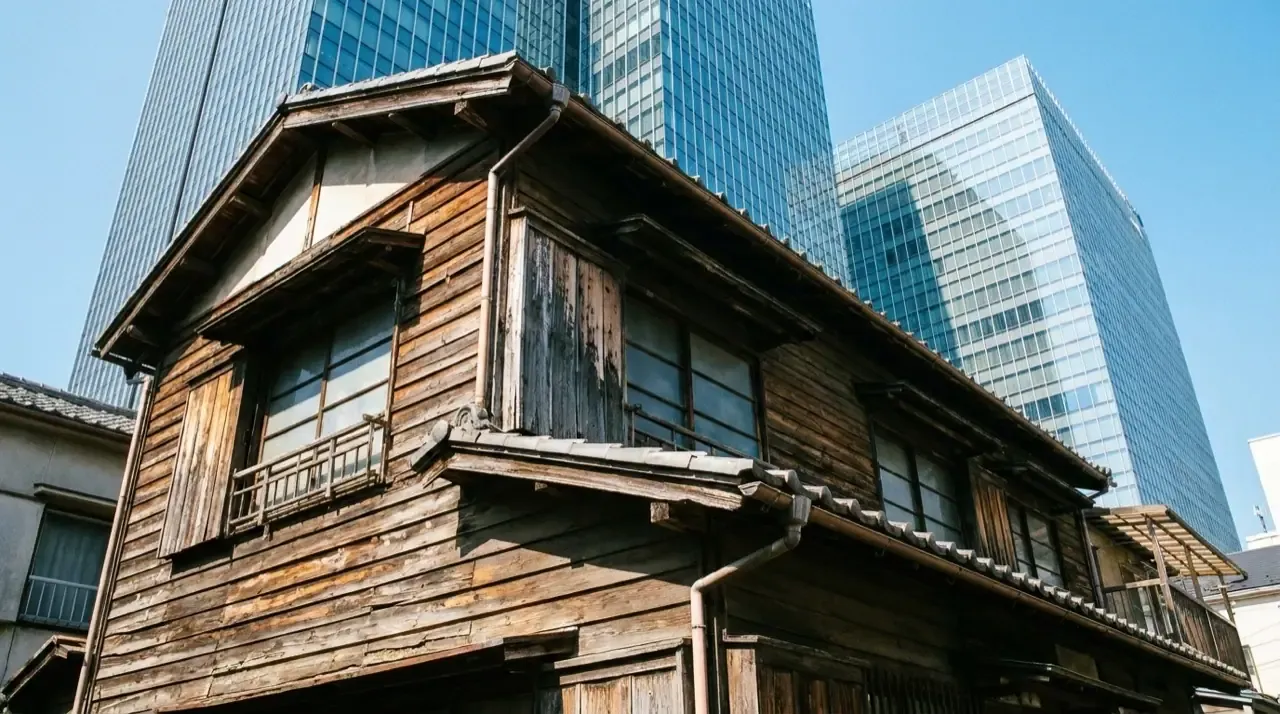
Most foreign buyers look at a 40-year-old wooden house in Tokyo and see a liability. The tax office sees a deduction machine.
Here is the mechanic that almost nobody explains to overseas investors. Japan does not let you depreciate land, because land does not wear out. It only lets you depreciate the building, on a fixed statutory schedule based on construction type. Wood gets a useful life of 22 years. Reinforced concrete (RC) gets 47 years (figures directional, as of writing). The shorter the assigned life, the bigger the annual write-off you get to claim against your rental income.
That is the first counterintuitive point: the cheaper, older, “worse” structure is the better tax asset. A wooden house generates a far larger annual deduction per yen of building value than a glossy new concrete tower, simply because the government insists you expense it faster.
And once that wooden building is past its 22-year statutory life, the schedule gets aggressive in your favor.
From the desk — For foreign landlords facing their first filing, the moment that lands hardest is always the building-to-land split on the contract. The ones who shrug and accept whatever the seller’s paperwork says leave thousands on the table every year, and I have watched plenty of them only realize it after closing, when the allocation is nearly impossible to revisit.
The 4-Year Rule, Explained Plainly
When you buy a used building that has already exceeded its statutory useful life, Japan does not give it zero remaining life. It gives it a fixed haircut formula:
Remaining life = statutory life x 0.2
For wood, that is 22 years x 0.2 = roughly 4 years (rounded down). So a wooden house built in, say, the 1990s is depreciated over about four tax years. You write off the entire building portion of your purchase price across four returns.
Concretely: if the building portion is worth 20,000,000 yen, you are claiming roughly 5,000,000 yen of depreciation per year for four years. That is a deduction you take every year without spending a single additional yen. It is pure paper loss, sitting on top of your real cash expenses (management fees, repairs, insurance, loan interest, property tax).
For buildings acquired after 2007, the straight-line method is mandatory. That sounds like a restriction but it is actually a gift to the planner: your deductions are level and identical each year, so you can model the exact shield before you ever sign. No guesswork, no declining-balance math. (Caveat: the 0.2 formula applies only to buildings already fully past statutory life; a building partway through gets a blended calculation, which is smaller.)
What This Does to a Non-Resident’s Tax Bill
Here is where it matters for foreign owners specifically.
If you are a non-resident earning Japanese rental income and you do nothing, your tenant or management company is generally supposed to withhold around 20.42% off the top of your gross rent and send it to the tax office. Gross. Before any expenses. That is the lazy default, and it is expensive.
But Japan lets you file an annual tax return instead, and on that return you deduct your real expenses plus depreciation against the rent. With a four-year wooden write-off stacked on top of operating costs, it is routine for the taxable rental profit to shrink dramatically, sometimes to near zero in the early years. You then reclaim the gap between the flat 20.42% already withheld and your much lower actual liability as a refund.
In other words: the depreciation does not just lower a future bill. For a non-resident, it converts a punishing flat withholding into a filed return where your effective rate can land far below 20.42%. The shield is the difference between those two worlds.
One honest caveat: this works best when you have meaningful building value and real rent. A tiny studio with thin rent and a low building allocation produces a smaller shield. Run your own numbers; our rental and tax modeling tools let you sketch the four-year curve before you commit.
Related reading: Property Taxes for Foreign Owners in Japan: The Full Timeline From Purchase to Sale.
Push for a High Building-to-Land Split at Purchase
Because only the building depreciates, the single most valuable negotiation you will have on this deal is not the price. It is the allocation of that price between land and building.
A purchase contract, or the supporting documentation, typically splits the total into a land portion and a building portion. The higher the building portion, the larger your depreciable base, and the larger every year’s deduction. Two buyers can pay the identical total for the identical house and walk away with very different tax outcomes purely because one secured a higher building allocation.
There are legitimate ways to support a higher building figure: the fixed-asset tax valuation ratio, a reasonable construction-cost estimate, or an appraisal. This is not about inventing numbers. It is about not passively accepting a lazy split that hands value to the non-depreciable land bucket. Raise it with your agent and your tax accountant before closing, because it is very hard to revisit after the fact.
This is also why ward selection matters less for the tax shield than people assume. The depreciation math travels with the building, not the postcode. Where the ward choice does bite is on land value, rent level, and exit liquidity, which is exactly what our ward guides are built to compare.
The Catch on Exit, and Why You Still Win
Nothing in tax is free, so here is the clawback, stated honestly.
Every yen of depreciation you claim lowers your cost basis in the property. When you eventually sell, your capital gain is calculated as sale price minus that reduced basis. So the deductions you enjoyed get “recaptured” inside the gain. If you wrote the building down to near zero, almost the whole building portion of your sale price shows up as taxable gain.
But look at the rate arbitrage, because this is the entire point of the strategy:
- The depreciation you took offsets rental income today, income that would otherwise be taxed at ordinary, potentially progressive rates.
- The recapture at sale is taxed as a capital gain. Hold the property more than five years and it qualifies as long-term, taxed at roughly 20.315%. Sell too soon, under the threshold, and short-term gains are taxed at roughly 39.63% (rates directional, as of writing).
So the trade is: take deductions now against income, pay them back later at the long-term capital-gains band. You are arbitraging a higher-rate deduction today against a lower-rate clawback tomorrow, and pocketing the spread, plus the time value of money on tax you deferred for years. The cardinal rule that makes it work: do not sell before the five-year long-term threshold. Selling at year four, right as the shield runs out, would hand the recapture back at nearly double the rate. That single timing mistake erases the whole edge. See our glossary for how the holding-period clock is actually counted, because it is not always a simple calendar five years from your closing date.
Related reading: Selling Tokyo Property as a Foreigner: Process, Timeline and Reclaiming the 10.21% Withholding.
How to Actually Set This Up
This is not exotic. It is a standard, well-trodden play, and the compliance overhead is small.
- Buy with the structure in mind. Favor a used wooden building past its 22-year statutory life if you want the fastest four-year shield. Decide deliberately between that and longer-lived RC, which gives a smaller annual deduction over a much longer runway. Our property comparison view lets you line up structure types side by side.
- Fix the allocation at closing. Get a defensible, high building-to-land split into the paperwork before you sign. This is your biggest lever and the hardest to change later.
- Appoint a tax agent. As a non-resident you must name a Japanese tax agent (a nozei kanrinin, meaning a local representative who files and corresponds with the tax office on your behalf). It is a fixed, cheap step, and it is what unlocks the filed return and the refund instead of the flat 20.42% withholding.
- File every year, and hold past five years. File the annual return to claim depreciation and recover the over-withheld tax, then plan your exit for after the long-term threshold so the recapture lands at the lower rate.
The headline is simple. Japan’s tax code rewards owning the kind of old wooden house most foreign buyers walk past. Get the structure right, get the allocation right, appoint your agent, file, and hold past five years, and you turn a depreciating building into one of the cleanest legal income shields available to an overseas investor. The houses are already on the market. The only question is whether you buy the next one knowing how the schedule works.