STRATEGY & YIELD
Tokyo Minpaku P&L, Line by Line: Cleaning, OTA Fees, and Net Margin
What does a Tokyo minpaku actually net after OTA commissions, cleaning, management, and utilities?
On this page 21
- Revenue Side: What Goes Into Gross
- The Expense Lines, Every One
- OTA Commission
- Cleaning Cost
- Property Management Fee (Remote Host)
- Utilities
- Internet
- Consumables and Amenities
- Linen and Laundry
- STR Insurance
- Building HOA and Repair Reserve Fees
- Maintenance and Repair Reserve
- Tax Preparation
- The Full P&L Summary
- Same Property, Two Scenarios: Does STR Beat Long-Term Rental?
- Scenario A: Minpaku STR (180-Day Cap, 60% Occupancy)
- Scenario B: Long-Term Rental (95% Occupancy = ~11.4 months rented)
- The Breakeven Occupancy: Where STR Starts Winning
- When Long-Term Rental Wins, and When STR Does
- Where This Goes Wrong
- FAQ
TL;DR: A Tokyo minpaku generating ¥3,000,000 in gross annual revenue might net ¥600,000–¥900,000 before mortgage and tax — a 20–30% net margin. That’s not bad for a passive income stream, but it’s not the “40% yield” some operators quote. The difference is in the expense lines that don’t get featured in YouTube thumbnails: per-turn cleaning costs, OTA commissions, consumables restocking, property management overhead, and the small-ticket items that aggregate into real money. This issue runs through every line, with actual directional figures — and then runs the same property as a long-term rental, because a minpaku at 60% occupancy doesn’t automatically beat a 95%-occupied long-term tenant.
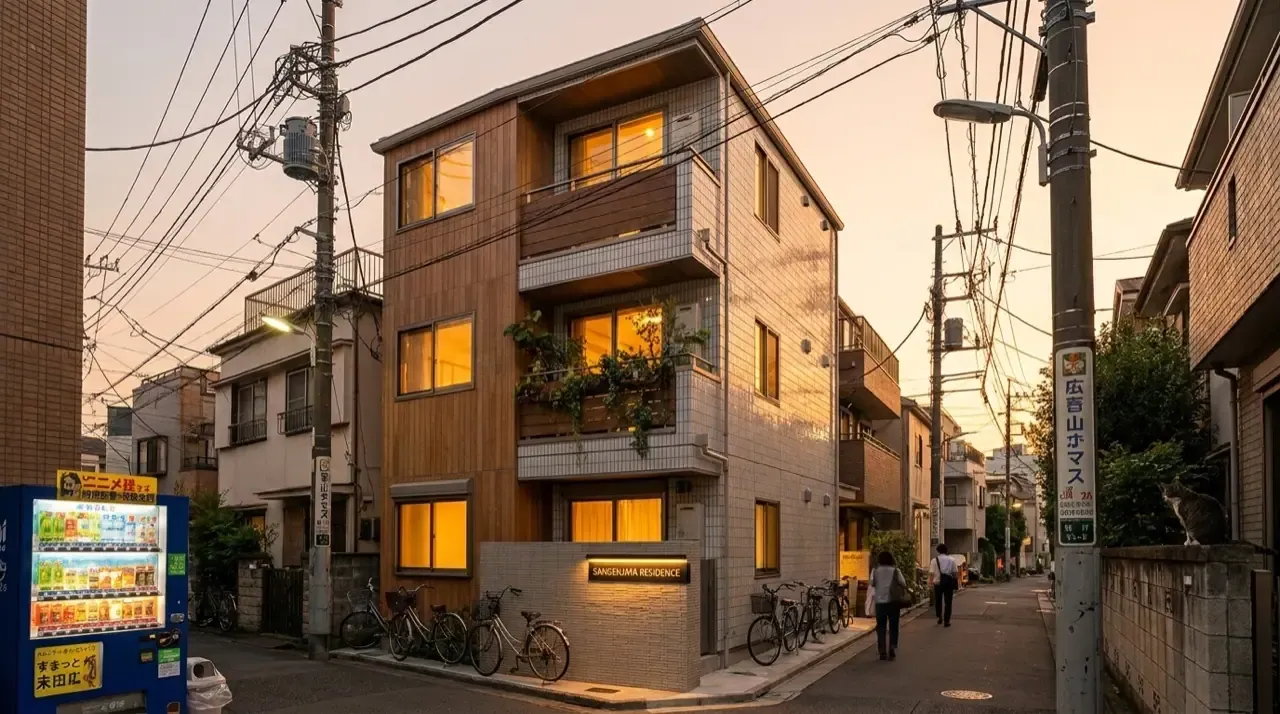
My cleaner — Tanaka-san, three years now — called me one Tuesday to flag that guests in my Sangenjaya unit had gone through an entire bottle of dish soap and six rolls of toilet paper in a two-night stay. Small things. But at ¥400 per consumables restock times 90 turns a year, that’s ¥36,000. Nowhere in most pro formas I see from investors who ask me to review their models.
The real P&L has thirty lines, not three.
Revenue Side: What Goes Into Gross
Gross revenue for a minpaku has components that get conflated.
Nightly rate revenue: ADR times occupied nights. The headline number.
Cleaning fees charged to guests: Most operators pass some or all of the cleaning cost to guests via a cleaning fee on the OTA listing. This is still subject to OTA commission and is still gross revenue. It does reduce your net cleaning cost exposure.
OTA revenue vs. direct booking: If you have any direct bookings (your own website, repeat guests, referrals), those don’t incur the OTA commission. At scale, direct bookings are the highest-margin channel. In early operations, expect 90%+ to come through OTAs.
Figures below are illustrative — representative of a well-managed 1LDK in this sub-market, not a guaranteed outcome.
For this model unit — a clean, modern 1LDK in Sangenjaya, Tokyo:
| Revenue line | Amount (directional) |
|---|---|
| Nightly rate revenue (90 nights × ¥22,000) | ¥1,980,000 |
| Guest-paid cleaning fees (90 turns × ¥3,000) | ¥270,000 |
| Total Gross Revenue | ¥2,250,000 |
From the desk — In the models foreign owners send me to review, the gap is never the headline ADR, it’s the thirty quiet expense lines underneath it, and the consumables and per-turn cleaning are where I most often watch a confident pro forma turn negative. The pattern across years of these reviews is the same: the cost structure barely moves with occupancy, so chasing cheap nights just buys you more turns to pay for.
The Expense Lines, Every One
OTA Commission
Airbnb charges hosts 3% for split-fee listings and up to 15% for host-only fee structures. Booking.com typically charges 15%. Vrbo is 8% plus processing fees. Most operators use Airbnb as primary with Booking.com secondary. Blended effective rate is typically 13–17%.
Using 15% blended: ¥2,250,000 × 0.15 = ¥337,500
Cleaning Cost
Professional cleaning in Tokyo for a 1LDK after guest checkout runs ¥6,000–¥12,000 per turn depending on the cleaning service and unit size. Budget ¥8,500 average.
90 turns × ¥8,500 = ¥765,000
Note: you charged guests ¥270,000 in cleaning fees. Net cleaning cost to operator: ¥765,000 − ¥270,000 = ¥495,000 net cleaning expense. This is the number to use in the P&L.
Property Management Fee (Remote Host)
If you’re not in Japan, you need a registered minpaku management company. Fees range from 10% to 25% of gross revenue depending on the service level. Full-service (guest communication, key management, linen, cleaning coordination) runs 18–22% typically.
Using 20%: ¥2,250,000 × 0.20 = ¥450,000
If you’re using a management company, they often handle cleaning and build it into their fee — making the cleaning line and management fee partially overlapping. Confirm what’s included before assuming separation.
Utilities
Electricity, gas, water. STR guests use more utilities per night than long-term tenants because they’re in the unit all day and don’t self-regulate usage. Budget ¥30,000–¥45,000/month for a 1LDK running active bookings.
¥40,000 × 12 months = ¥480,000 (mostly fixed regardless of occupancy)
Internet
Non-negotiable for STR. A dedicated high-speed line plus pocket wifi backup: ¥6,000–¥10,000/month. Pocket wifi is increasingly required because guests book expecting reliable connectivity and building wifi fails.
¥8,000 × 12 = ¥96,000
Consumables and Amenities
Toilet paper, soap, shampoo, conditioner, dish soap, garbage bags, coffee pods, tea bags, sponges. Professional operators maintain par stock and restock after each turn. Budget ¥400–¥700 per turn.
¥550 × 90 turns = ¥49,500
Linen and Laundry
If not using a linen service (which management companies sometimes include), you’re either paying commercial laundry or running loads yourself. Commercial linen service for a 1LDK: ¥2,000–¥4,000 per turn.
If management company handles this within their 20% fee — it’s covered above. If separate: ¥3,000 × 90 turns = ¥270,000. Don’t double-count.
STR Insurance
Standard renters or property insurance explicitly excludes STR commercial activity. You need dedicated minpaku insurance. Airbnb’s AirCover has limits. Dedicated Japanese STR insurance runs ¥30,000–¥80,000/year for a single 1LDK unit. This is not optional.
Budget: ¥60,000/year
Building HOA and Repair Reserve Fees
HOA fee and building repair reserve — mandatory for condo ownership. Not STR-specific but part of your operating cost. Typical for a 1LDK in a mid-range building: ¥15,000–¥25,000/month combined.
¥20,000 × 12 = ¥240,000
Maintenance and Repair Reserve
Appliance failures, touch-up painting, lock maintenance. STR properties see heavier wear than residential tenancies. Budget ¥150,000–¥250,000/year for a unit in active operation.
Budget: ¥200,000
Tax Preparation
Minpaku income is taxable. You need a Japanese accountant or tax advisor familiar with STR. Handling this remotely: ¥100,000–¥200,000/year for annual filing.
Budget: ¥150,000
The Full P&L Summary
All figures below are illustrative — representative of this unit type and scenario.
| Line | Amount |
|---|---|
| Gross Revenue | ¥2,250,000 |
| Less: OTA Commission (15%) | −¥337,500 |
| Less: Net Cleaning Cost | −¥495,000 |
| Less: Management Company (20%) | −¥450,000 |
| Less: Utilities | −¥480,000 |
| Less: Internet | −¥96,000 |
| Less: Consumables | −¥49,500 |
| Less: STR Insurance | −¥60,000 |
| Less: Building HOA/Repair Reserve | −¥240,000 |
| Less: Maintenance Reserve | −¥200,000 |
| Less: Tax Prep | −¥150,000 |
| Net Operating Income (before mortgage/tax) | −¥308,000 |
Negative. On ¥2.25M gross revenue.
90 nights at ¥22,000 ADR doesn’t work with this cost structure. You need higher ADR, more nights, or a leaner expense model — and the 180-day cap limits the nights lever.
Revised scenario: 130 nights, ¥28,000 ADR (strong location, quality unit):
| Line | Amount |
|---|---|
| Gross Revenue | ¥3,640,000 |
| Less: OTA Commission | −¥546,000 |
| Less: Net Cleaning | −¥677,500 |
| Less: Management | −¥728,000 |
| Less: Utilities | −¥480,000 |
| Less: Internet | −¥96,000 |
| Less: Consumables | −¥71,500 |
| Less: Insurance | −¥60,000 |
| Less: HOA/Repair Reserve | −¥240,000 |
| Less: Maintenance | −¥200,000 |
| Less: Tax prep | −¥150,000 |
| Net Operating Income | ¥390,000 |
Net yield on a ¥35M property: about 1.1%. Before mortgage debt service. These numbers should make you selective about which properties qualify for STR.
Same Property, Two Scenarios: Does STR Beat Long-Term Rental?
The honest question is not which earns more per night (minpaku, easily) but which earns more per year after the cap, the costs and the work. It is an operating-business decision dressed up as a real estate one. The structural differences first:
| Minpaku (short-term) | Long-term lease | |
|---|---|---|
| Legal night cap | 180 nights a year under the minpaku law, often cut further by Tokyo ward rules on weekdays or residential zones. The rest of the year sits empty or shifts to monthly lets. | None: let 365 nights a year. |
| Revenue ceiling | High RevPAR on the nights you run, but only ~180 sellable nights, so peak-season rates and occupancy make or break the year. The cap, not demand, binds. | Flat, predictable monthly rent. Lower headline, but the whole year counts. |
| Operating load | A hospitality business: cleaning, linens, dynamic pricing, guest messaging, platform fees, compliance reporting. | Near passive: one tenant, one contract, occasional repairs. |
| Income stability | Cyclical: tourism shocks, seasonality, FX swings in inbound demand, tightening rules. High ceiling, shaky floor. | A signed lease and strong tenant protections give bankable cash flow. Lower ceiling, solid floor. |
| Property and location fit | Needs tourist pull plus a building and zone that permit it; many condo bylaws ban it outright. | Works almost anywhere with normal residential demand. |
| Market benchmark | Directional platform and operator data (Tokyo STR benchmarks); underwrite on 180 nights, never 365. | Tokyo Kantei: 23-ward family-type condo asking rent ¥5,170/㎡/month in August 2026, +6.4% YoY (source). |
I own STR units and long-term rental units. The comparison needs to be made honestly, on actual numbers, for each specific property.
Last year I converted one of my minpaku units to long-term rental for six months while waiting for a building management vote on a new STR bylaw. Monthly rent came in lower than my best STR months, higher than my worst. Operating work dropped to near zero. The comparison wasn’t obvious.
Figures below are illustrative — representative of this property type in Taito-ku at current market conditions, not a specific transaction or guaranteed outcome.
Property: 1LDK, 42 sqm, 5th floor walk-up condo, Taito-ku (Asakusa adjacents), built 2009
Purchase price: ¥32,000,000 (illustrative)
Monthly mortgage payment (35-year, 1.2% interest): ~¥88,000 (illustrative)
Scenario A: Minpaku STR (180-Day Cap, 60% Occupancy)
| Item | Amount |
|---|---|
| Available days | 180 |
| Occupancy rate | 60% |
| Booked nights | 108 |
| ADR | ¥19,000 |
| Gross room revenue | ¥2,052,000 |
| Cleaning fee revenue (net of OTA cut) | ¥180,000 |
| Total gross revenue | ¥2,232,000 |
| OTA commission (16%) | −¥328,320 |
| Cleaning (48 turnovers × ¥10,000) | −¥480,000 |
| Property management (20% of gross) | −¥446,400 |
| Utilities | −¥300,000 |
| Supplies | −¥130,000 |
| Insurance (STR) | −¥100,000 |
| Property tax | −¥170,000 |
| Tools and subscriptions | −¥70,000 |
| Maintenance reserve | −¥250,000 |
| Net Operating Income | −¥42,720 |
At 60% occupancy with this cost structure, STR loses money.
Scenario B: Long-Term Rental (95% Occupancy = ~11.4 months rented)
| Item | Amount |
|---|---|
| Monthly rent (illustrative, Taito-ku 1LDK) | ¥115,000 |
| Annual rent (12 months) | ¥1,380,000 |
| Vacancy allowance (5%) | −¥69,000 |
| Net annual rent | ¥1,311,000 |
| Agency fee (tenant sourcing, amortized) | −¥57,500 |
| Property management (5% of rent) | −¥65,550 |
| Insurance (landlord) | −¥30,000 |
| Property tax | −¥170,000 |
| Maintenance reserve | −¥250,000 |
| Net Operating Income | ¥738,950 |
A sanity check on the rent assumption: ¥115,000 on 42 sqm is ≈¥2,740/㎡ a month (computed), about 53% of Tokyo Kantei’s August 2026 23-ward average asking rent of ¥5,170/㎡ for family-type condos. That average covers asking rents on units of 30㎡ or more across all 23 wards, weighted toward pricier central stock, so it is not a quote for this unit. The point is direction: the illustration does not flatter the long-term side, and a unit renting nearer the 23-ward average would widen its lead.
Long-term rental NOI: ¥738,950
STR NOI at 60% occupancy: −¥42,720
STR loses by ¥781,670 per year in this comparison. Before considering the time and operational complexity of running a minpaku. The single-unit remote owners who end up switching to long-term rental a year in are almost never the ones losing on revenue; they were losing on their own evenings, burned out by the turnover churn that never shows up in a pro forma.
The Breakeven Occupancy: Where STR Starts Winning
The question isn’t “is STR better?” — it’s “what occupancy rate does STR need to beat long-term rental?”
Working backward from the long-term rental NOI of ¥738,950:
STR needs to generate ¥738,950 in NOI. With the fixed cost structure above (approximately ¥1,875,000 in operating costs for utilities, management, insurance, taxes, tools, reserve), STR needs net revenue of ¥738,950 + ¥1,875,000 = ¥2,613,950.
After OTA commission (16%) and cleaning costs that scale with occupancy, the breakeven booked nights calculation (simplified):
- Net revenue per booked night after OTA (¥19,000 × 0.84 = ¥15,960) plus cleaning fee contribution (~¥1,700) = ~¥17,660
- Minus variable cost per turnover (cleaning ¥10,000 ÷ 2.2 nights = ¥4,545/night), minus variable supplies (~¥1,100/night)
- Net contribution per booked night: ~¥12,015
At fixed costs of ~¥1,200,000 (property tax, insurance, tools, reserve — costs that don’t scale with occupancy):
- Breakeven above long-term rental NOI: (¥738,950 + ¥1,200,000) ÷ ¥12,015 ≈ 161 booked nights
161 booked nights within the 180-day cap = 89.4% occupancy of available days.
High bar. Not impossible for a well-run central Tokyo unit in peak neighborhoods — but not automatic. At 60%, STR loses. At 89%+, it wins meaningfully. Most operators live somewhere between those two numbers.
When Long-Term Rental Wins, and When STR Does
Four situations where long-term rental wins:
1. The building has STR restrictions. If the building bylaws prohibit minpaku (increasingly common in Tokyo), long-term rental isn’t a fallback — it’s the only option. Having the comparison already modeled means you know exactly what you’re buying.
2. You’re a remote operator without a strong management partner. Poor management compounds the occupancy problem. A long-term rental with a 5% management fee is simpler, cheaper, and less exposed to operational failure.
3. The property is in a ward with aggressive operating restrictions. If municipal rules constrain your actual operating window below 120 days, the STR math breaks further. Recalculate the breakeven occupancy — it may be above 100%, meaning STR is structurally unprofitable at that location.
4. Your purchase price was high and you’re holding long. A ¥40M+ 1LDK in prime Shinjuku or Shibuya may have compelling long-term appreciation. Running it as a stable long-term rental while collecting appreciation preserves the asset, avoids management complexity, and generates reliable income.
Properties where STR materially outperforms:
- High-ADR locations (Asakusa, Shinjuku entertainment adjacents, Harajuku) where room rates push ¥22,000–¥28,000 average
- Properties suitable for groups (2LDK+) where ADR per booking exceeds what equivalent long-term rental would produce
- Hotel/ryokan-licensed properties running 365 days with no cap
- Special-zone minpaku (tokku minpaku) properties in designated zones
The comparison also changes with the portfolio. If you own 10 units and have a dedicated cleaning team, management infrastructure, and direct booking channels, your cost per unit drops. At scale, STR economics improve. For a single unit held remotely, they’re tighter than the benchmarks suggest.
The verdict. Choose minpaku only with a genuine tourist-pull location, a building that legally permits short-term operation, and either the appetite to run a hands-on hospitality business or the budget to pay a manager who does. Done right on the right asset, the best ~180 nights can out-earn a full year of long-term rent, but the edge is thinner and more fragile than nightly rates imply, and one ordinance change can erase it. If you want passive, predictable, defensible cash flow, or cannot clear the zoning and licensing hurdles, long-term renting wins. Underwrite minpaku on 180 nights and realistic occupancy: if it only pencils at 365 nights, it does not pencil.
Related reading: Tokyo Short-Term Rental Benchmarks 2026: ADR, Occupancy and RevPAR.
Where This Goes Wrong
- Operators report gross revenue as “what I earn” without subtracting OTA fees first. The OTA commission comes off the top. Your actual receipt is net of commission already on most platforms.
- Forgetting building management fees because they feel like ownership costs, not operating costs. They’re both. Every owner in the building pays them.
- Underpricing ADR to chase occupancy and then discovering the expense structure doesn’t change with occupancy. Utilities run the same whether you’re at 40% or 80%.
- Skipping STR insurance because “the building is insured.” The building policy does not cover guest claims against you as an STR operator. This is a meaningful liability gap.
- Not modeling the tax bill. If your NOI is ¥390,000, your Japanese income tax obligation will reduce that further depending on your total income picture.
- Using STR revenue to cover long-term rental opportunity cost. Some investors compare STR gross revenue to long-term rental net rent. Wrong comparison. Use NOI vs. NOI.
- Not modeling seasonality. A flat annual occupancy assumption hides the fact that 60% average might be 80% in Q2 and 40% in Q1. January has the same insurance, tax, and reserve costs as April, with far less revenue.
- Assuming STR ADR grows linearly. The weak yen has been driving inbound tourism demand and pushing ADR up. That tailwind may not persist at the same rate. Long-term rental rents in Tokyo are stickier and more predictable, and they are not standing still: Tokyo Kantei’s 23-ward family-type asking rents were up 6.4% year on year in August 2026.
FAQ
Can I reduce the management fee by hiring my own cleaners? Yes, but you still need a registered minpaku management company for legal compliance if you’re not in Japan. You can unbundle the management role (communication, compliance) from cleaning (physical service) and hire cleaners separately. The compliance management function typically runs 8–12% of gross if cleaning is excluded.
Are there property types where the P&L works better? Larger units with higher ADR relative to fixed costs. A 2LDK charging ¥45,000/night spreads fixed costs (utilities, HOA/reserve fees, insurance) across higher revenue. Also: properties where you can reduce or eliminate the management fee by running operations yourself.
How do Japanese operators handle the HOA fee disclosure for minpaku? Some operators try to exclude HOA fees from their STR P&L because they’re an “ownership cost.” This inflates apparent NOI. Include them.
Is the maintenance reserve realistic? Yes, and in some months conservative. STR accelerates wear on appliances, flooring, and fixtures. A broken washing machine or AC unit in August is a ¥100,000–¥200,000 unplanned expense. The reserve exists to absorb that without panic.
Does OTA fee structure vary by market or listing type? Yes. Airbnb’s host-only fee model (where the full service fee is charged to the host rather than split with the guest) typically results in a 14–16% fee. Their split-fee model charges the host ~3% and the guest ~14%. Test both for ADR competitiveness.
Is there a simple rule for when to choose STR vs long-term rental? Not a simple rule, but a useful frame: if your breakeven occupancy (to match long-term rental NOI) is above 75%, the STR proposition is fragile. If it’s below 65%, STR has a reasonable margin of safety.
What if I want to do both — STR during peak, long-term rental during off-peak? Possible in some configurations. Be careful about lease terms — monthly furnished rentals during off-peak can work, but standard long-term leases (typically 2-year contracts) can’t be easily switched seasonally. Monthly rentals typically come at a discount to minpaku rates.
Does the 180-day cap apply if I’m doing monthly corporate rentals? Corporate rentals at 30+ day stays are generally not classified as minpaku and are not subject to the 180-day cap. They’re also not classified as hotel/ryokan activity. They have their own legal character. Confirm with a licensed agent for your specific situation.
What cap rate should I target for a Tokyo STR acquisition? Using NOI, a well-run inner Tokyo minpaku might produce a 2–3.5% cap rate (NOI ÷ purchase price). Long-term rental on the same property might produce 2–3%. The spread is narrower than STR advocates typically claim. Capital appreciation assumptions matter significantly in both cases.