STRATEGY & YIELD
Detached House (Kodate) vs Mansion in Tokyo: A Foreign Buyer's Guide
A Tokyo-based insider explains how a foreign buyer should weigh a detached house (kodate) against a mansion apartment on control, depreciation, resale, and remote upkeep.

On this page 6
TL;DR: A detached house (kodate) gives you freehold land and full control but real maintenance work; a mansion apartment gives you a managed, low-effort asset where you own a share of the building and pay monthly fees forever. The land under a kodate tends to hold value while the wooden structure depreciates fast; a concrete mansion in a strong location usually resells and rents faster. If you live abroad and want hands-off, lean mansion; if you want land and are willing to manage, lean kodate.
What You Are Actually Buying: Land vs a Share of a Building
The first thing I tell foreign buyers is that kodate (a detached house) and mansion (the Japanese word for a mid- or high-rise concrete apartment building, not a luxury home) are not two flavors of the same thing. They are two different ownership structures.
With a kodate you typically buy the land in freehold (called shoyuken, full ownership) plus the structure sitting on it. You control the plot. You can rebuild, extend within zoning, or knock the house down and sell the land. In Tokyo, where buildable land is scarce, that land is the part that holds its worth.
With a mansion you buy a unit plus an undivided share of the land under the whole building (shikichiken, the land-use right tied to your unit) and a share of common areas. You cannot act alone. Roof, elevator, exterior, and reserve decisions run through the kanrikumiai (the owners’ management association) by vote. You trade control for convenience.
There is also a small category of shakuchiken (leasehold land) kodate, where you own the house but lease the ground. These look cheap on paper and are harder to finance and resell. I’d steer most foreign first-time buyers away unless they fully understand the lease terms. Confirm any land-rights question with a licensed judicial scrivener (shihoshoshi) before you sign.
Related reading: Earthquake Insurance for Japan Property: A Foreign Buyer’s Guide.
Depreciation: Wood Burns Down Faster Than Concrete (On Paper)
Japanese tax and market psychology both treat building value as a wasting asset, and the structure type drives the speed.
A wooden kodate has a statutory useful life of 22 years for tax depreciation; a reinforced-concrete mansion is 47 years. These are fixed legal standards, not my estimates. In practice, the market often values a wooden house at or near zero after roughly two to three decades (directional, as of writing), so an older kodate frequently trades essentially as land minus demolition cost. That is not always bad news: if the land is good, you are buying the durable part and getting the house thrown in.
A concrete mansion depreciates more gently and keeps a quoted building value for longer, which supports financing and resale. The flip side is that you are paying for a structure that is slowly losing book value while you also pay monthly to maintain it.
For a buyer, the practical takeaway: with a kodate, scrutinize the land; with a mansion, scrutinize the building and its reserves. Confirm the actual depreciation treatment for your situation with a licensed tax accountant (zeirishi), because it changes with how you hold and use the property.
Related reading: Tower Mansion vs Older Mansion Tokyo: A Buyer’s Guide.
The Monthly Burden: Fees You Can’t Avoid vs Work You Must Do
Both options cost money to hold. They just bill you differently.
A mansion charges two recurring fees: kanrihi (the management fee that pays for cleaning, the front desk, and day-to-day running) and shuzenhi (the long-term repair-reserve fund for big future work like exterior re-coating and waterproofing). Together these commonly run a meaningful monthly sum (directional, as of writing) and they tend to rise over a building’s life, especially shuzenhi as the structure ages. Before buying, I always pull the chouki shuzen keikaku (the long-term repair plan) and the reserve balance. A thin reserve means a future lump-sum levy on owners. This is the single most common thing foreign buyers skip and regret.
A kodate has no management association and no mandatory monthly fees, which sounds liberating. But the work does not disappear, it just becomes yours. Exterior repainting, roof, water heater, termite (shiroari) inspection, and the garden are all on you, on your schedule, with your contractors. Managing that from overseas is the real challenge. You will likely need a local kanri (property management) company, which adds a fee a mansion would have bundled.
So the honest framing is not “fees vs free.” It is predictable bundled cost (mansion) vs lumpy self-directed cost (kodate).
Resale and Rental Liquidity: Who Buys It Next
Liquidity is where I see foreign buyers make or lose money, because you are not just buying, you are eventually selling to the next person.
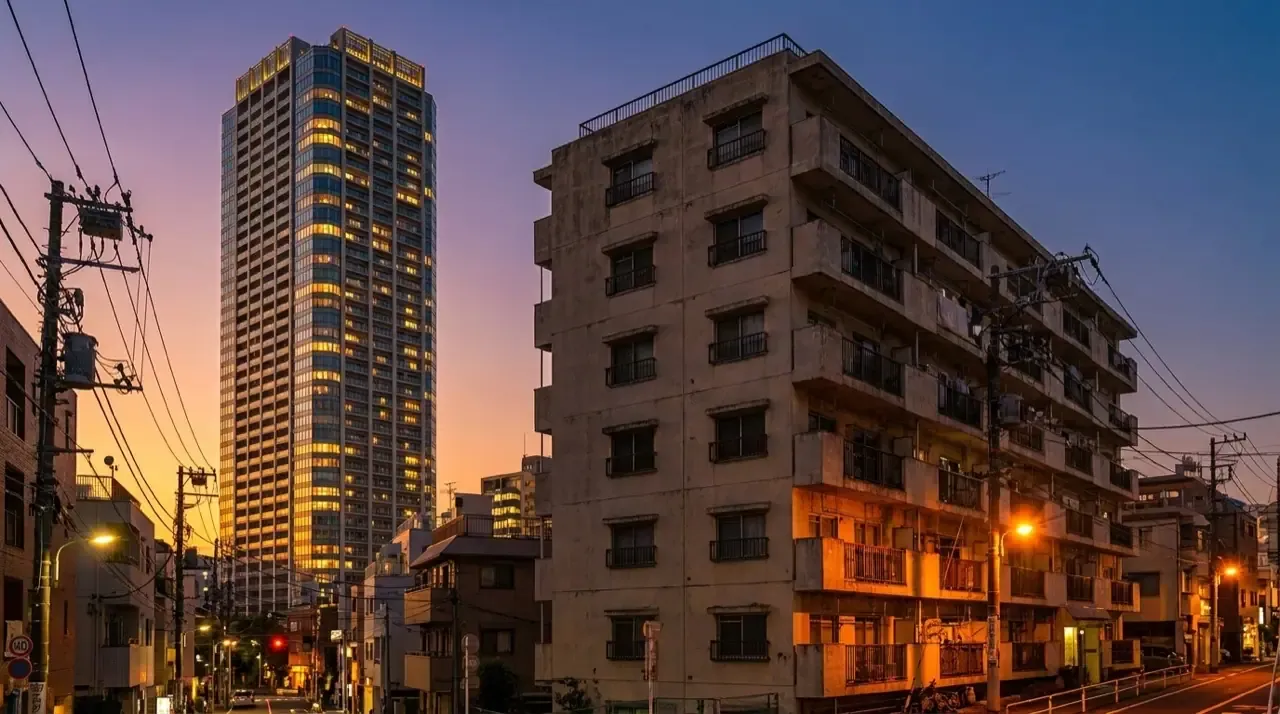
Centrally located mansions are the most liquid residential asset in Tokyo. The buyer pool is wide, banks lend against them readily, and a well-run building near a station rents quickly. For an investor who wants a tenant in place and a clean exit, this is usually the easier path. The cost is that you compete with many similar units, so pricing power is limited.
A kodate has a narrower buyer pool, often families who want space and a plot, and it can sit on the market longer. But scarcity cuts the other way too: a good-sized lot in a desirable, low-supply ward can command strong land-driven pricing because they rarely come up. Rental demand for whole houses exists but is thinner than for apartments, and a vacant house generates zero income while still costing you upkeep.
If you are buying for short-term rental / STR (minpaku), note that the rules differ sharply by building and by ward. Many mansion associations prohibit minpaku outright in their bylaws, while a kodate you own outright gives you more freedom, subject to the national 180-night cap and local ordinances. Always check the specific ward and the building bylaws, and confirm licensing with a licensed administrative scrivener (gyoseishoshi).
Who Each One Actually Suits
Let me be direct, because most articles dodge this.
Buy a mansion if you live abroad, want minimal hands-on work, value fast resale and rental, and are comfortable owning a share of a building and paying fees forever. It is the lower-friction, more liquid choice for most overseas investors, and the easier asset to finance and manage remotely.
Buy a kodate if you specifically want freehold land and control, you have a long horizon, you can tolerate vacancy and lumpy maintenance, and you have or will hire reliable local management. It suits buyers who believe in a specific plot of Tokyo land more than in a building, or who want minpaku flexibility a mansion association would block.
Neither is “better.” They solve different problems. The mistake is buying a kodate for hands-off income, or buying a mansion expecting land-like control.
What This Means For Your Next Move
Decide what you are optimizing for before you look at listings: liquidity and low effort point to a mansion; land control and flexibility point to a kodate. Then pressure-test the specifics. For a mansion, demand the repair plan and reserve balance. For a kodate, get the land surveyed and the structure inspected, and line up local management before you close.
If you want a second set of eyes on a specific property or want me to model holding costs both ways, Talk to us. You can run rough numbers yourself first with our tools, and if you are still choosing an area, compare wards to see where land-driven kodate value or mansion rental demand actually holds up. None of this is personalized legal or tax advice, so confirm the technical points with a licensed professional before you commit.
Sources: Japan National Tax Agency — depreciation of fixed assets, Ministry of Land, Infrastructure, Transport and Tourism (MLIT), Real Estate Information Network System (REINS) market data, Japan Tourism Agency — private lodging (minpaku) rules