BUYING & FINANCE
Buying Off-Plan in Tokyo: A New-Build Mansion Guide for Foreigners
A Tokyo-based insider explains how foreigners buy off-plan pre-construction new-build mansions: the developer sales process, staged deposits, financing, and resale trade-offs.
On this page 6
TL;DR: Buying off-plan (pre-construction) Tokyo new build means signing a contract and paying a deposit on a unit that may not exist yet, with completion often one to two years out (directional, as of writing). You get a brand-new home, a statutory builder warranty, and first pick of units, but you pay before you can stand in the room, you carry developer-completion risk, and you absorb a new-build premium that a resale buyer does not. For most foreign buyers I work with, off-plan makes sense only when the building and developer are strong and your financing is confirmed early.
What “Off-Plan” Actually Means Here
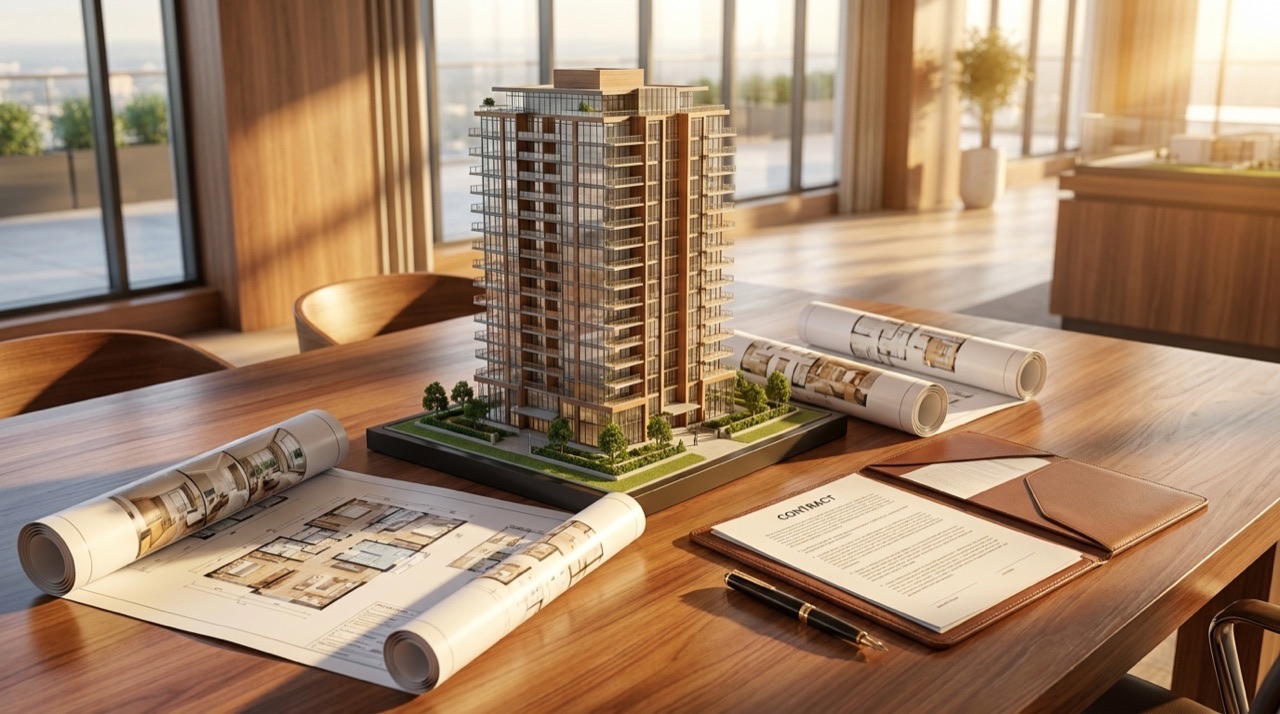
When I say off-plan (buying off-plan Tokyo), I mean you reserve and contract a unit in a new condominium, a shinchiku mansion (a brand-new multi-unit residential building), before it is finished. The Japanese term for this whole pre-completion sales model is aozora-uri or, more commonly, mishun bukken (a property sold before completion). The developer markets from a glossy moderu ruumu (a show-room mock-up of a representative unit), floor plans, and material samples. You are buying a drawing and a promise.
This is genuinely common in Tokyo. A large share of new family-sized units in central wards sell out before the building tops out (directional, as of writing). Popular projects in strong locations can go to a lottery, called a chusen, when applicants outnumber units. So part of “buying” off-plan is actually qualifying to be allowed to buy.
For a pre-construction new build Japan foreigner buyer, the headline thing to understand: there is no separate legal regime that blocks you because you are not Japanese. Foreigners, including non-residents, can buy freehold here. What changes for you is financing and logistics, which I will get to.
The Developer Sales Process, Step by Step
The Japan new mansion purchase process for a new build runs through the developer (or its appointed sales agent), not a typical resale broker. Roughly:
- Registration and information session. You register interest, attend a briefing, and tour the moderu ruumu. No money changes hands.
- Application / lottery (moshikomi or chusen). You apply for a specific unit. If oversubscribed, a lottery decides.
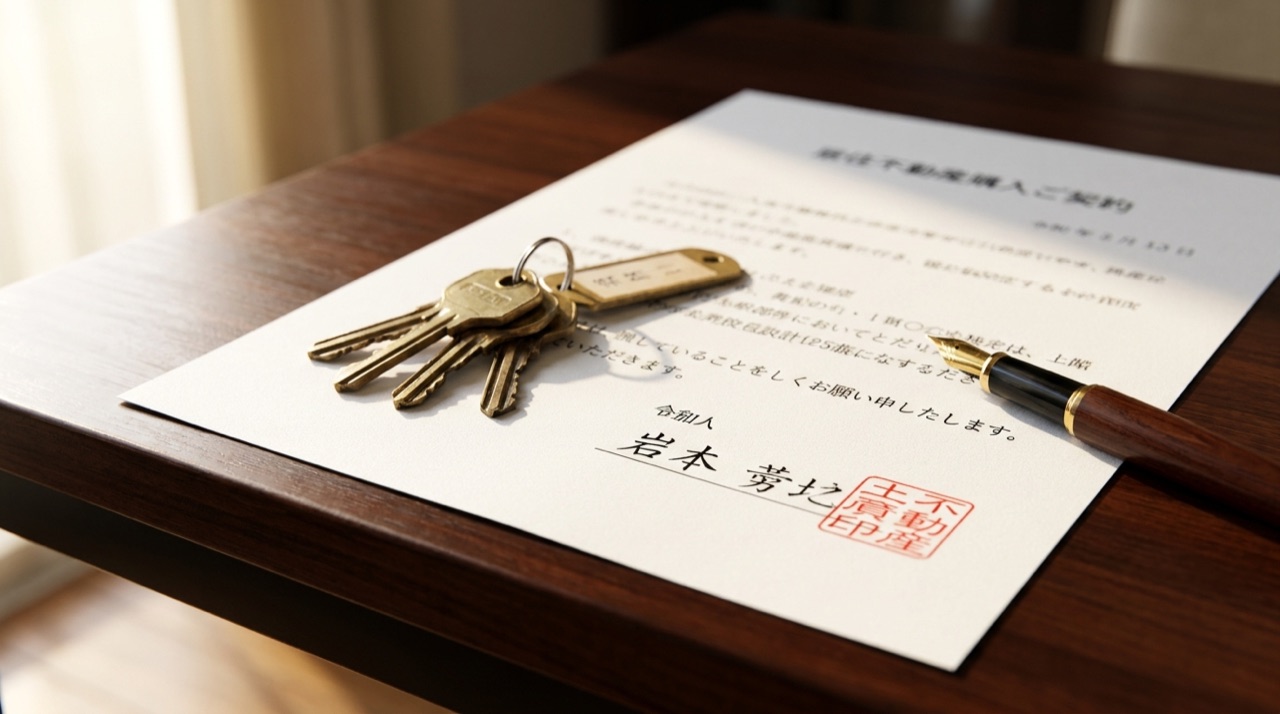
- Important Matters Explanation (juyo jiko setsumei). Before you sign anything, a licensed agent must walk you through the juyo jiko setsumeisho (the legally mandated disclosure document). This is required by law. Insist on it in a language you actually understand; do not nod along.
- Purchase contract (baibai keiyaku) and deposit. You sign and pay the deposit.
- Interim / construction-stage payments, where applicable.
- Completion, final inspection (naiken), final payment, and registration (toki) of your ownership.
One detail foreigners miss: the broker commission cap. By law the maximum brokerage fee is 3% of the price plus 60,000 yen (plus consumption tax). With a true new-build bought directly from the developer, there is often no separate brokerage fee at all, because the price already bakes in the developer’s sales cost. That is a real difference from resale.
The Deposit and Payment Timeline
Here is where off-plan diverges sharply from buying a finished home. The off plan deposit Japan property structure usually works like this.
At contract, you pay an earnest/deposit called tetsuke, commonly somewhere around 5% to 10% of the purchase price (directional, as of writing). The tetsuke is not just a booking fee; it is legally meaningful. Under standard contracts, if you walk away you forfeit it, and if the developer defaults they typically must return it doubled. That symmetry is worth understanding before you sign.
Because the building is unfinished, you may also face staged payments during construction, sometimes an intermediate payment (chukan-kin) at a defined construction milestone, with the large balance due at completion and handover (hikiwatashi). For buyers using a mortgage, the bank generally disburses the bulk of the loan at completion, so you bridge the deposit and any interim payments from your own cash. Budget for that gap; it surprises people.
A protection point I always flag: for pre-completion sales, Japanese law requires developers to protect buyer deposits above certain thresholds, via guarantee or deposit insurance, so your money is not simply gone if the developer fails mid-build (directional in the details, as of writing). Ask the developer exactly how your tetsuke is protected, and get it in the contract. This is not personalized legal advice; have a licensed lawyer or judicial scrivener (shiho-shoshi) confirm the specifics for your deal.
Pros, Cons, and the New-Build Premium
Let me be straight about the trade-off, because the marketing will not be.
The real pros. It is new, so you get the latest seismic and insulation standards, modern layouts, and a statutory defect-liability warranty on major structural elements and water-tightness that runs for years from handover (directional, as of writing) under Japan’s housing-quality law. You get first choice of floor, view, and direction. And you have a long runway to arrange money and move your life.
The real cons. You pay before you can see, touch, or hear the actual unit, daytime light, train noise, neighbours. The moderu ruumu is a best case. There is developer and completion risk: delays, spec changes, or, rarely, a developer that fails. And there is the new-build premium: a brand-new Tokyo unit carries a markup that tends to come off in the first years of ownership, much like a new car. Resale (chuko) units skip that initial drop. If you must sell soon after completion, you can find the market values your “used” unit below what you paid, even in a flat market. Off-plan rewards holders, not flippers.
Contrast with resale: with chuko you see the exact unit, the actual building, the shuzenhi (the building repair-reserve fund) balance and the management track record, and you usually negotiate harder on price. You trade away newness and warranty depth for certainty and, often, a better entry number. Both are valid; they suit different buyers.
Financing a Pre-Completion Purchase From Abroad
This is the part that derails buying new build Tokyo from abroad buyers most often. Japanese megabanks are cautious about lending to non-resident foreigners without permanent residency or Japan income; many simply will not, or will ask for a large down payment (directional, as of writing). Realistic routes include a few foreign-friendly lenders in Japan, an overseas bank that lends against Japanese property, or simply paying cash.
A non-tax-resident seller (relevant when you later sell, but worth knowing now) is generally subject to a non-resident withholding of 10.21% of the gross sale price in the standard case, with 20.42% appearing in other withholding contexts. Cross-border tax, including how Japan’s tax interacts with your home country and structures like an Australian SMSF, is genuinely complicated. I work in Tokyo real estate, not your tax adviser, confirm all of this with a licensed cross-border tax professional and, for visa questions, an immigration lawyer.
Start financing conversations before you pick a unit. With staged payments and a completion-date balloon, a financing fall-through after you have paid tetsuke is an expensive way to learn this.
What This Means For Your Next Move
Off-plan in Tokyo is a fine path if, and only if, the developer is solid, the location holds value, your deposit is contractually protected, and your money is lined up before you sign. If any of those is shaky, resale usually serves you better. Run the numbers on the new-build premium versus a comparable chuko unit before you fall for the show-room.
If you want a sanity check on a specific project, a developer’s reputation, or whether off-plan or resale fits your timeline and tax situation, Talk to us, a real person reads every message. Model your deposit, staged payments, and likely financing gap with our tools, and compare wards to see where the new-build premium is most, and least, likely to hold.
Sources: Japan Real Estate Institute (JREI), National Tax Agency of Japan, Japan Property Central, MLIT (Ministry of Land, Infrastructure, Transport and Tourism)