INSIDER TAKE
The Earthquake Fear Is Priced for 1923 — Tokyo Is Built for 2026
Foreign buyers reflexively discount Tokyo property for earthquake risk, but the danger lives in old pre-1981 wooden housing in rural Japan, not the modern steel-and-concrete towers investors actually buy. That mispricing is your discount.
On this page 6
- The fear you arrive with is aimed at a building that no longer exists
- The 1981 line is the cleanest filter you can apply
- The country already ran the stress test — at magnitude 9.1
- Seismic isolation: the technology you are quietly buying
- Where the risk is real — so you screen for it honestly
- You are being paid for a risk engineering already solved
TL;DR: Foreign buyers reflexively haircut Tokyo property prices for earthquake risk, but the data shows that danger is overwhelmingly concentrated in old, pre-1981 wooden houses in rural prefectures — not the post-2000 steel-and-concrete towers an investor actually buys. Japan’s 1981 building code and 2000 grading law, plus seismic isolation now deployed in more than 9,000 buildings, meant zero modern high-rises collapsed even in the magnitude 9.1 Tohoku quake. The fear is real but mispriced — and you can buy on the right side of that mistake.
The fear you arrive with is aimed at a building that no longer exists
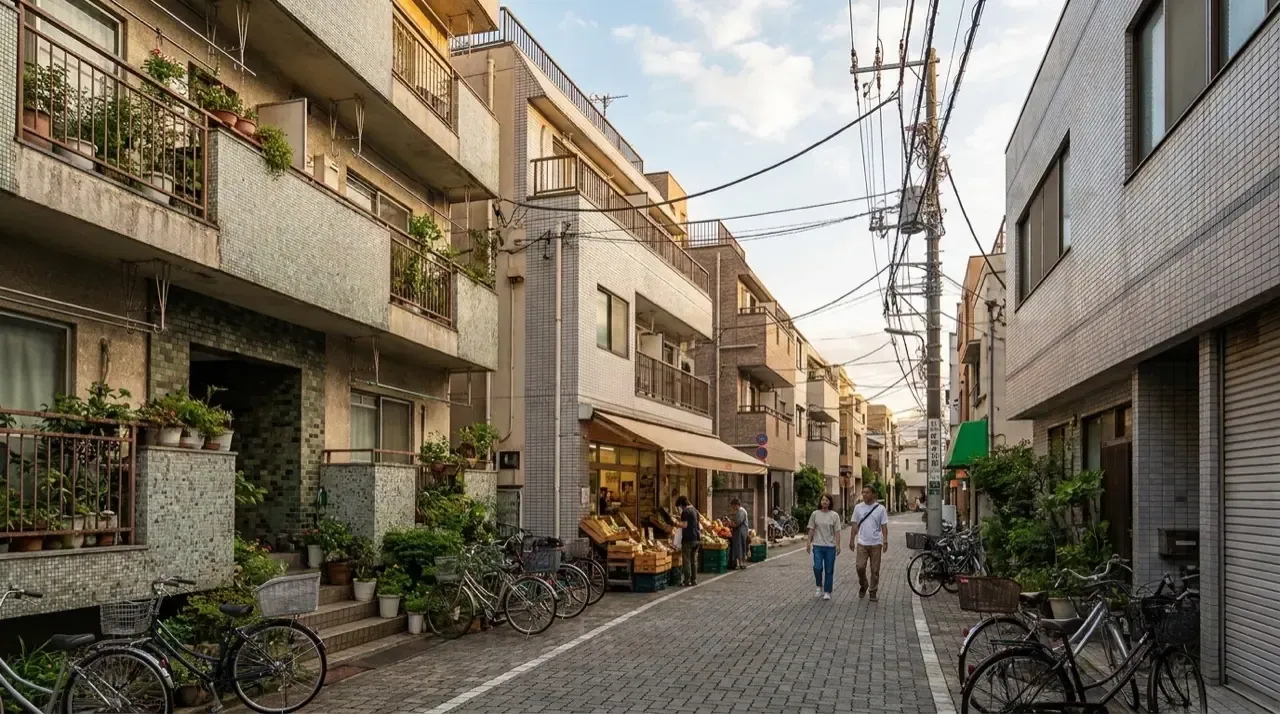
Almost every foreign buyer I talk to carries the same mental image: 1923, the Great Kanto quake, fire sweeping a city of wood and paper. They price Tokyo property as if they might buy that city. They will not. The building stock you can actually purchase in the prime market — central towers, post-2000 condominiums, institutional office space — has almost nothing in common with the housing that fails in earthquakes.
This matters because the discount is not abstract. It shows up as hesitation, as a lower offer, as walking away from a clean asset. The fear is doing real work on your wallet. So it is worth asking, coldly: where does earthquake damage in Japan actually happen, and does it happen to the thing you are buying?
The answer, repeatedly, is no.
From the desk — The single question I ask every nervous overseas buyer is the build year, and I watch their fear evaporate when the answer is post-2000 reinforced concrete. The hesitation I see almost never comes from people who actually buy that stock; it comes from a mental picture of old wooden houses they were never going to purchase in the first place.
The 1981 line is the cleanest filter you can apply
Japan rewrote its seismic building standard in 1981. The new code is called shin-taishin, which translates roughly as “new earthquake resistance.” It changed the engineering requirement from “survive a moderate quake” to “do not collapse in a severe one.” A second reform in 2000 added a grading and inspection law that tightened wooden-house construction and foundation rules specifically.
These dates are not trivia. They are the single most useful screen a foreign buyer can use, because the damage record sorts almost perfectly along them.
In the 1995 Kobe quake (magnitude 6.8), roughly 97 percent of the buildings that collapsed were built before the 1981 code. In the 2024 Noto Peninsula quake (magnitude 7.6), an estimated 61 to 66 percent of collapsed homes in the worst-hit towns were wooden houses built before 1981, and the deaths clustered in exactly that old rural stock. The pattern is the same every time: post-1981 buildings survive in far greater numbers, and the older the building, the worse it does.
So the practical move is simple. Confirm the construction year and the code regime before you fall in love with anything. A post-1981 build, and ideally post-2000, puts you on the safe side of every disaster record Japan has on file. (Honest caveat: build year is a filter, not a guarantee — a specific building can still be poorly maintained, and you always verify the individual structure, not just its birthday.)
Related reading: Tower Mansion vs Older Mansion Tokyo: A Buyer’s Guide.
The country already ran the stress test — at magnitude 9.1
Most cities argue about earthquake safety in theory. Tokyo settled it in practice.
The 2011 Tohoku earthquake registered magnitude 9.1, the largest in Japan’s recorded history. It was a genuine worst-case event. And not one modern Tokyo high-rise collapsed. The 634-metre Tokyo Skytree, then newly built, came through intact. Towers swayed — they are engineered to sway, that is the point — but they stood.
Think about what that means as a buyer. You are not being asked to trust a brochure or a model. You are looking at a real-world result from the biggest quake the country has ever measured. Very few global cities can show you that receipt. London, New York, the European capitals foreign capital usually compares Tokyo against — none of them has been tested at that magnitude, because none of them has had to be built for it. Tokyo’s engineering is expensive precisely because it has already been proven under load.
Seismic isolation: the technology you are quietly buying
Here is the part most foreign buyers do not know they are getting for free.
Many modern Japanese buildings sit on seismic isolation, called menshin. In plain English: instead of bolting the building rigidly to the ground, engineers place flexible bearings between the structure and its foundation. When the ground jerks sideways, those bearings absorb and decouple the motion, so the building above moves far less than the earth beneath it. The result is dramatically lower forces on the structure and, just as important for an owner, less damage to the interior and contents.
More than 9,000 buildings in Japan now use this technology, up from roughly 4,000 a decade ago. That is a global-leading installed base — nowhere else has deployed base isolation at this scale. When you buy into a modern Tokyo tower with menshin, you are buying a level of seismic protection that simply is not available at any price in most other world cities.
Nationally, about 87 percent of Japanese homes now meet earthquake-resistance standards, versus around 51 percent in the hardest-hit Noto towns. That gap is the whole story in one statistic: the danger lives where modernization has not reached. Urban, institutional, modern Tokyo property sits at the safe end of that distribution — not the exposed end.
Where the risk is real — so you screen for it honestly
I am not telling you risk is zero. That would be the kind of hype this publication exists to avoid. Earthquake risk in Japan is real and it kills people. The honest point is that it is sorted — it concentrates in specific, identifiable building types, and you can screen those out.
Avoid old wooden stock, especially pre-1981. Be cautious about reclaimed-land and soft-soil sites where liquefaction can occur regardless of the building’s own strength; this is a ground question, not a structure question, and it is checkable ward by ward. Read the building’s structural type and confirm it is reinforced concrete or steel-reinforced concrete rather than light wood frame. None of this requires you to be an engineer. It requires you to ask three or four specific questions — and modern Tokyo inventory answers them well.
Our wards pages flag ground and soil characteristics by area, and the glossary explains shin-taishin, menshin, and the structural-type labels you will see on every listing sheet.
You are being paid for a risk engineering already solved
Now the part that should change how you act.
In early 2025, the yield gap on central Tokyo offices was roughly 1.9 percent — wider than New York at around 1.7 percent and London at around 1.2 percent (directional, as of writing). Part of that extra spread is a premium the market still attaches to “Japan, earthquakes.” But the seismic risk that premium is supposedly compensating you for has been largely neutralized by exactly the code, testing, and isolation technology above. You are being paid a wider spread for a danger that modern engineering has already engineered down.
That is the definition of a mispricing. The fear is genuine; the discount it produces is aimed at buildings you would never buy. When a market pays you extra for a risk you have screened out, the rational response is not to share the crowd’s hesitation — it is to act on the gap.
So here is the move. Set a hard filter: post-1981, ideally post-2000, reinforced concrete or steel, and check the ground beneath it. Use our wards data to rule out soft-soil exposure, run the numbers on our tools, and put a real spread next to New York and London on the compare page. Then make your offer on the building’s actual safety record — not on a fear inherited from a city that burned a century ago, in structures that the prime Tokyo market replaced long before you arrived.
The earthquake fear is priced for 1923. The building you are buying was made for 2026. That gap is yours to take.
